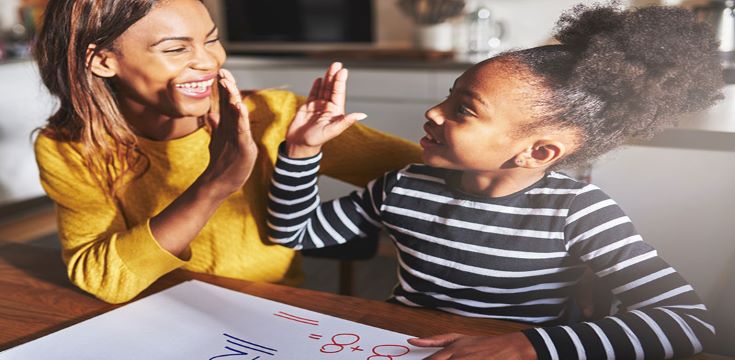
We parents all hope that in the future our children will be responsible, successful, and happy adults. Their childhood will be the perfect time to start encouraging them and giving them the necessary tools so that, ultimately, they can achieve everything they set their minds to. By reinforcing their self-esteem and helping them to trust themselves and manage their emotions, they will be ready when the time comes to face the “adult world” with courage and determination.
1. “You can count on me” or “I’m here to help you”
Whenever you see that your little ones doubt themselves or want to do something, but they can’t seem to get the courage to do it —either because they don’t know how to do it or because they are afraid— remind them that you are there for them. Let them know that they can count on you and that they have your support and your help if needed. Just knowing that you are there for them will encourage them to try and they may succeed, even if you don’t have to help them.
2. “Tell me” or “I’m listening”
Stop what you are doing, for you it will only be a few minutes, but for your children, it will mean that you care and that they can count on you. Listen carefully, don’t make fun of their story or downplay its importance. If they wanted to share it with you, it is because it is important to them. Don’t interrupt them. If you want to give your opinion or add something, wait until they finish. What you can do is show interest and excitement in what they tell you: “Really?,” “Wow,” “Amazing,” children love this.
3. “I love you very much” or simply “I love you”
We take care of them, look after them, pay for their education, arrange their after-school classes, buy them everything they need, and even don’t sleep a wink when we are worried about them. All this and more simply because we love them and they are the most important thing in our lives. However, for a child, reaching this conclusion is not as simple. In addition to showing children our love through our actions, we should also do it verbally.
- It strengthens the bond between parents and children and improves family communication.
- It gives children confidence and peace of mind, as they feel surrounded by love.
- It reinforces their self-esteem and helps them to love and accept themselves as they are.
- It allows them to grow happily, transmitting and providing that happiness to their whole environment.
- It strengthens their emotional intelligence and their relationship with their feelings.
- Children who feel loved are positive and optimistic.
- They show politeness and respect for others.
So, whenever you can, take the opportunity to tell your children how much you love them between hugs and kisses.
4. “Do you forgive me?”
As imperfect human beings, we all make mistakes, mom and dad included. And what better way to teach our children to accept and take responsibility for their mistakes than by leading by example? Many times, we not only do not ask for forgiveness, but we force our children to do it. In these cases, we send children a very confusing message.
5. “I believe in you” or “I trust you”
When we are little, knowing that mom and dad trust and believe in us makes us feel, as if by magic, all-powerful because they know everything. And even if what we want to do doesn’t work out right the first time, continuing to count on their trust helps us to not get frustrated and to try again. By trusting them, you will help them develop self-confidence.
6. “I get you” or “I understand how you feel”
This phrase reflects empathy and a connection with our children’s feelings and makes it clear to them that they can count on our understanding and support. For both children and adults, knowing that someone understands us makes us feel supported, identified, and calmer.
A simple and honest “I understand you” at the right time can make all the difference.
7. “Cry as much as you need to.”
Crying is a completely natural process that both children and adults experience in certain situations. It isn’t chosen, it just happens, and it isn’t forever. As soon as we start to feel relieved, we stop crying. Asking children to not cry is asking them to repress their emotions, and that way they will never learn to manage them. Therefore, the best thing you can do is to let them vent, listen to them, and offer your support, always seeking to help them understand what they are feeling in a healthy and constructive way.
8. “I’m proud of you.”
This is another powerful phrase that parents should use often with their children, but with awareness and when the situation warrants it, to praise the moments of effort and self-improvement of the child. Don’t focus on the result they obtained, but on the work they did to achieve it, the process they went through, the obstacles they overcame, and the fact that they didn’t give up. However small or big they may be — make us so happy that we want to share them with the world. But we must not forget that the most important thing is to share them with kids so they know how proud we are.
9. “Your opinion is important to me.”
It is clear that we always want the best for our children, even if they often don’t understand it or don’t like it. That doesn’t mean that “they must do as we say,” and that we don’t let them have a say or don’t listen to their point of view. Including the opinion of our little ones in a certain family, decisions reinforce their self-esteem and make them feel happy and an active part of the family.
For example, ask them about what to do on the weekend, what to give a family member for their birthday, or what movie to see, among other similar situations.
10. “Thank you very much.”
It goes far beyond good manners and politeness. In other words, what “thank you very much” means is: I know what you’ve done, I want you to know that I appreciate it and that it has made me happy.
There are many occasions when we can show gratitude to our children:
- On a daily basis: we have an infinite number of reasons for which to thank our children: any kind of help they give us —like setting the table or taking out the trash— even if that something is their responsibility, like tidying their room.
- For their patience: many times, even if we don’t notice it, the little ones make really big efforts to be patient in moments when they are bored, for example, at the supermarket, waiting at the bank, or sitting in a traffic jam that doesn’t move forward. They would rather be playing, but they are there, waiting, and it would be a nice gesture on our part to thank them.
In addition to the reasons we have listed above, we know that your child is the apple of your eye, who puts joy and color into your life, who brings a smile to your face even in the worst moments, your main reason for pride and happiness, and all that also deserves a big “thank you.”