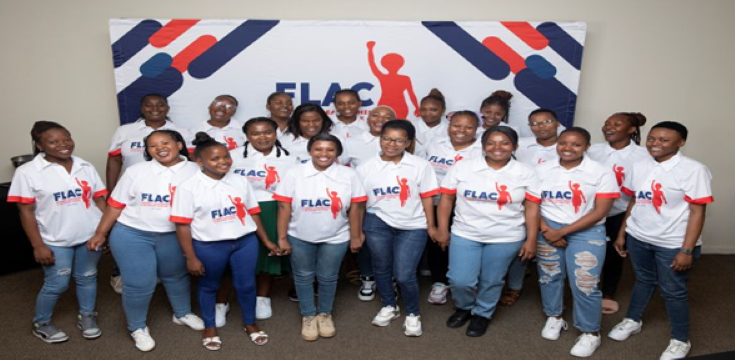
As Soul City Institute celebrates 30 years of transformative impact, we reaffirm our unwavering commitment to feminist advocacy, with a sharp focus on reproductive justice. February—Reproductive Health Month—offers an opportunity to reflect on the urgent need for reproductive rights and health equity in South Africa.
“For three decades, Soul City Institute has been at the forefront of social and behavioural change, championing health equity, gender justice, and the rights of young women and marginalised communities through advocacy, policy development, communication, and in-community programmes,” says Phinah Kodisang, CEO of Soul City Institute. “While we haven’t always called our work ‘feminist,’ at its core, it has always been about challenging patriarchy, dismantling power imbalances, and amplifying the voices of young women as vital elements of sexual and reproductive health.
Our commitment to reproductive justice is no different—it is about ensuring that every person has the right to make decisions about their bodies, free from coercion and discrimination.”
South Africa has made progress, but the reality is that too many young women still struggle to access the healthcare, support, and resources they need.
Sub-Saharan Africa has the highest adolescent birth rate in the world, with 99 births per 1,000 young women aged 15-19—more than double the global average of 44 per 1,000. Early pregnancy often leads to severe health risks and long-term socio-economic disadvantages for women. Furthermore, 17% of all women in Sub-Saharan Africa and 23% of married or in-union women have an unmet need for family planning, leaving millions vulnerable to unplanned pregnancies.
Despite an increase in the use of modern contraceptive methods, only 52% of women who want to prevent pregnancy have their needs met. These statistics highlight the urgent need for comprehensive sexual and reproductive health rights (SRHR), services, and education.
Reproductive health is inseparable from the broader struggle for gender equality. Since its inception during the peak of the HIV epidemic, Soul City Institute has disrupted harmful gender norms, advocated for policies that protect SRHR, and positioned gender-based violence as a public health issue. Our media, advocacy, and community engagement work has created safe spaces for young women to lead change, challenge harmful cultural practices, and push for systemic reform.
Unsafe abortion remains a major contributor to maternal mortality, with estimates suggesting that between 5.2% and 17.2% of maternal deaths annually in Sub-Saharan Africa result from unsafe abortion procedures.
While South Africa is one of the few countries on the continent where abortion is legally available on request, many women—especially those in rural and underserved areas—still struggle to access safe and legal services – as enshrined in the South African Constitution – due to stigma, lack of facilities and restrictive socio-economic conditions. The continued existence of these barriers is a direct violation of women’s rights and autonomy.
As Soul City Institute looks to the future, we are strengthening our commitment to feminist leadership through initiatives such as the FLAC (Feminist Leadership and Activism Centre), expanding our advocacy at both regional and global levels and deepening our focus on digital activism to ensure that young feminists have the platforms and tools to shape the future.
“Reproductive Health Month is a reminder that the fight for bodily autonomy is far from over,” concludes Kodisang. “After 30 years of advocacy, we are not slowing down. We will continue to challenge power structures, fight for gender justice, and ensure that every person has the right to make decisions about their own body. This is not just a February issue—it is a daily priority. And we will not stop until every person has full control over their own reproductive choices.”