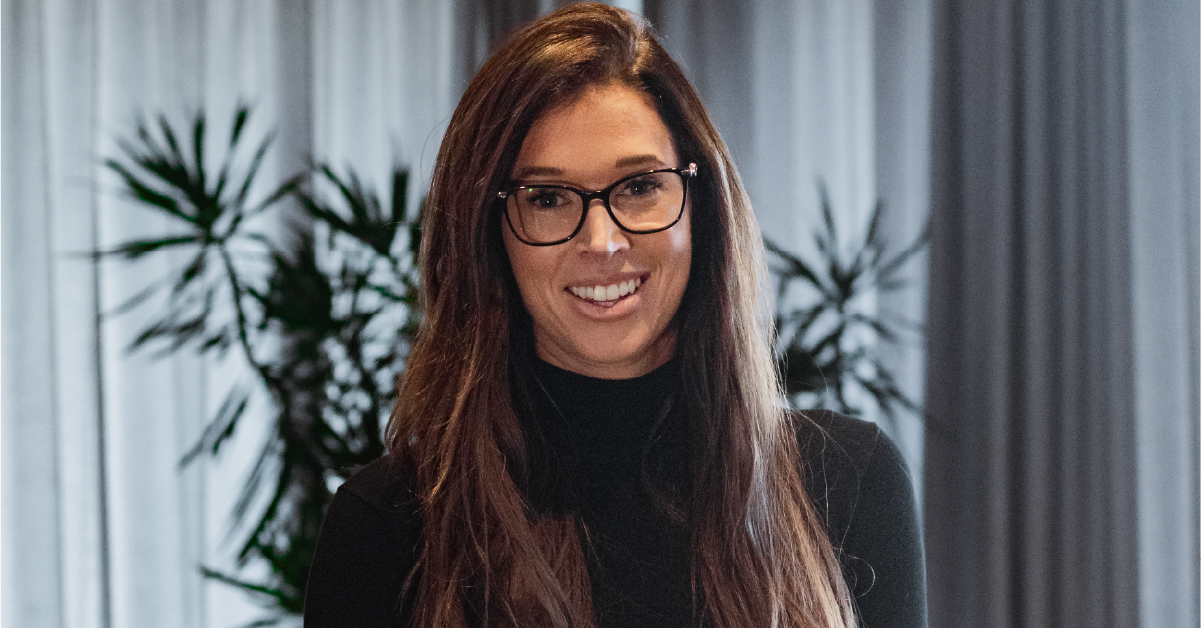
Leadership is a journey shaped by the people we meet and the lessons we choose to embrace. For Jessica Hawkey, every experience has contributed to a leadership style built on curiosity, continuous learning, and intentional growth. By observing inspiring leaders, learning from diverse perspectives, and staying true to her own values, she has developed an authentic approach that empowers both individuals and teams to thrive.
1. Tell us about your career journey and what led you to your current leadership role.
My journey began by building a strong foundational skillset in my 20s, gaining extensive local and international experience across finance, asset management, and operational leadership. Through key leadership roles at global institutions like the Carrick Group and State Street Poland, I developed a deep appreciation for strategic growth and operational excellence.
However, as I was exposed to the IT sector, I identified a critical imbalance in the ecosystem: an exponential demand for software developers alongside an alarming youth unemployment rate, paired with traditional education models that weren’t preparing graduates for the real world. As I stepped into my 30s, I knew I wanted to build a business to bridge this gap.
That led to the founding of redAcademy and pioneering our Skills Integration as a Service (SIaaS) model, creating a direct, hands-on pathway for South African youth to enter skilled IT careers while giving businesses the tech talent they desperately need.
2. What has been the most defining leadership lesson you’ve learned throughout your career?
The most defining lesson has been remaining completely non-negotiable on company values. Leadership requires you to consistently deliver on these values yourself and expect the exact same commitment in return from your team.
Equally important is having the courage and clarity to recognise when alignment is lost and knowing when it is time to part ways. Maintaining high standards and protecting your culture means making tough decisions swiftly when an individual is no longer the right fit for the vision or the team.
3. How would you describe your leadership style, and how has it evolved?
My style is centred on setting a clear, compelling vision and defining a practical pathway to achieve it. I focus on providing my team with explicit expectations, the right tools, and continuous support to succeed, while keeping open lines for honest, transparent conversations when things aren’t working.
While my leadership style has naturally evolved as my level of responsibility has grown and the size of my teams has varied, my core principle remains unchanged: set clear expectations, support your people in delivering on them, and ensure total alignment across the board.
4. What are some of the biggest challenges you’ve faced as a woman in leadership, and how did you overcome them?
In the early stages of my career, I was often the youngest and frequently the only woman at the executive table. Instead of letting that intimidate me, I chose to view it as a distinct advantage. It allowed me to absorb information from experienced leaders while bringing fresh perspectives and new ideas to the room.
Navigating those environments taught me how to observe what worked, pinpoint what I would do differently when it was my turn to lead, and build quiet confidence in my ability to execute. Today, as a Managing Director, that experience directly shapes how I lead: I am deeply intentional about recognising performance and opening real doors of growth for talented young professionals who prove themselves.
5. How do you foster an inclusive, high-performing culture within your organisation?
By establishing clear expectations, enforcing personal accountability, and creating room for people to innovate and take initiative. You have to build a culture where failure resulting from bold, new ideas is fully acceptable. It’s how we learn and innovate. Incompetence, however, is not. When people know the guardrails, feel supported to stretch themselves, and are held to high standards, performance naturally follows.
6. What business trends do you believe will shape leadership over the next five years?
The impact of AI cannot be ignored, and it will continually redefine how teams operate. As AI reshapes daily roles and functions, leaders will need to shift their expectations, timing, and quality standards to keep their businesses agile and effective.
Leadership will require coaching teams not just to become more efficient, but to critically assess AI outputs, raise the bar on quality, and apply their deep business context more intentionally. The biggest requirement for any modern manager will be becoming comfortable with constant change. The way of work is evolving quickly, and leaders must guide their teams through that landscape with confidence.
7. Who has influenced your leadership journey the most, and why?
I’ve taken a compound approach to leadership by learning from everyone around me, observing the qualities I deeply admire, and actively avoiding the traits I wouldn’t want to take on. I’ve been fortunate throughout my career to work directly alongside Country Leads in large corporates, Senior Management, and C-Suite executives across various industries.
Each brought a distinct leadership style to the table. Combining those real-world observations with my own operational experiences, alongside continuous reading and research, has allowed me to choose a leadership philosophy that feels authentic, grounded, and effective.
8. What advice would you give to women aspiring to step into executive leadership positions?
Equip yourself with the core skillsets and operational experience required for the role, and seize every opportunity that comes your way. Learn from those who are already in senior positions.
Prepare yourself for the reality that executive leadership can be lonely at times. Build a strong, trusted external network of peers and mentors who can serve as a sounding board and support system.
Know why you want it. Be crystal clear on the specific impact you want to make in your business, your industry, and the broader economy. When you face the inevitable challenges, of which there will be many, that core purpose will be the driver that keeps you grounded and moving forward.