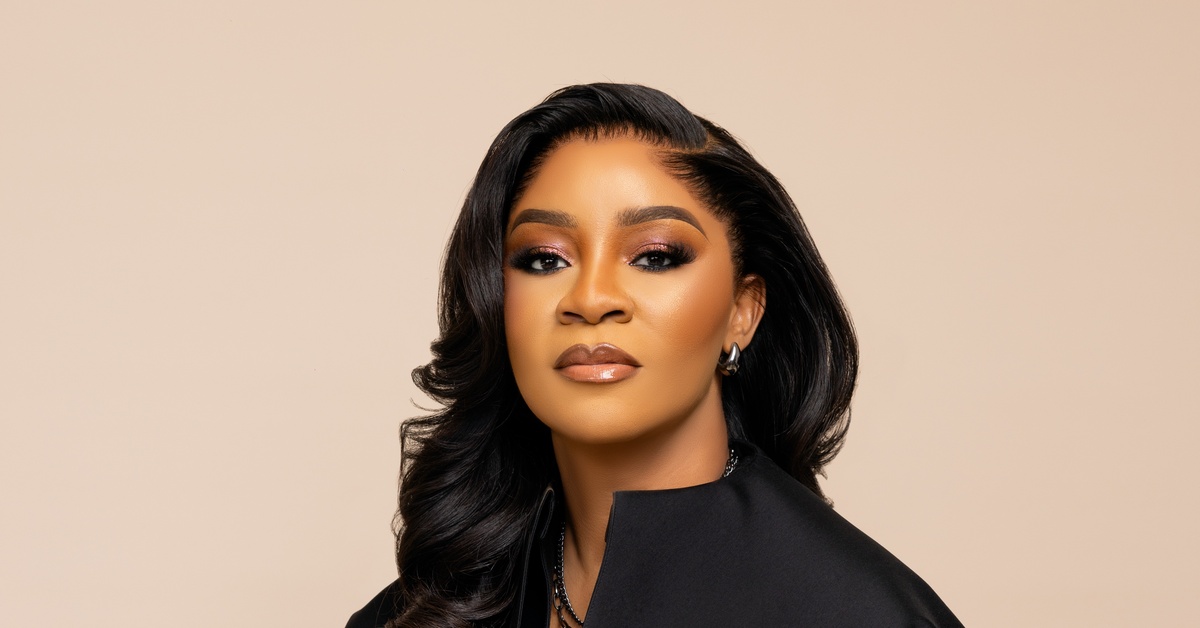
In a rapidly changing business landscape, building a successful company is only part of the journey – the real challenge is creating a business with the vision, resilience, and adaptability to stand the test of time. In this Q&A, Deola Art Alade, Group CEO and Co-Founder of Livespot360, Founder of Entertainment Week Africa, and Women Driving Culture, shares her insights on building businesses that go beyond short-term success, create lasting impact, and turn bold ideas into enduring ventures.
1. You have helped build one of Africa’s leading creative businesses, spanning live experiences, content, production, and technology. Looking back, what inspired you to take the entrepreneurial route, and what has been your biggest lesson as a founder?
Let me begin with a gentle reframe. I didn’t build this business alone. My co-founder and I built it, and over twelve years we’ve grown it into an ecosystem spanning studios, live experiences, spaces, scenic production, and talent. And honestly, I’ve never been motivated by entrepreneurship itself. I was motivated by solving problems.
Early in my career, I kept encountering gaps. There were incredible creative ideas, but not enough infrastructure to execute them. There was talent, but not enough opportunity. There was ambition, but very little access to world-class production, funding, or mentorship. I lived those gaps personally, as a young creative with no one to learn from and later as a founder searching for skilled hands to bring a vision to life.
I could either complain about those gaps or build across them. That’s how Livespot360 began, and it’s why entrepreneurship, for me, has always been an act of service. The biggest lesson? Build institutions, not moments. Moments create headlines. Institutions create industries. That has become my guiding principle: don’t build something people remember for a season. Build something that still creates opportunity long after you’ve left the room.
2. Livespot360 has been behind some of Africa’s most recognisable productions and cultural moments. What has it taken to transform bold creative ideas into commercially successful, scalable businesses?
It has taken the unglamorous decision to treat creativity like a business. One of the biggest misconceptions about our industry is that success comes from brilliant ideas. Ideas matter, but execution is where value is created. At Livespot360, every creative idea has to answer difficult questions. Can it scale? Can it be repeated? Can it create jobs? Can it attract investment? Can it become intellectual property that generates value beyond the first experience?
Behind every cultural moment we’ve delivered, from producing Love Like A Movie and bringing Kim Kardashian to Nigeria for the first time, to executive producing Real Housewives of Lagos and The Voice Nigeria, there is structure: budgets, timelines, risk planning, and teams built to deliver at a global standard. Scale came from integration. Rather than renting capability, we built it.
Our group runs its own studios, production infrastructure, spaces, and experience teams, so the value created by one bold idea stays in the ecosystem and funds the next. That’s the difference between being creatively busy and commercially sustainable. And to be clear about my role in all of this: my job has never been to produce every project.
My job has been to build a company capable of producing excellence repeatedly. But beneath all the structure, I still get excited by the magic of an audience experiencing something extraordinary together. That feeling is what started all of this, and it has never left.
3. Many people see the glamour of the entertainment industry, but not the business behind it. What are the key ingredients required to build sustainable creative enterprises rather than one-off successful projects?
The creative economy has matured. Being talented is no longer enough. In my experience, sustainable creative businesses require five things. Discipline, because creativity without discipline remains a hobby. Systems, because a business shouldn’t depend on the founder’s energy every single day. Intellectual property, because projects end but assets compound, and you must own what you create.
Partnerships, because growth is rarely a solo journey. And patience, because everyone wants overnight success, but very few people are willing to spend years becoming excellent. Looking back, though, I realise some of the achievements I’m proudest of aren’t projects at all. They’re people. A sustainable creative enterprise is a talent pipeline.
Some of the strongest founders in our industry today learnt their craft inside our teams, and that’s not a loss to me. It’s proof the enterprise is alive. The businesses that last are usually built quietly, and thoroughly, before they become visible.
4. African culture is receiving unprecedented global recognition. Where do you believe the greatest opportunities lie for African entrepreneurs to create value while retaining ownership of their intellectual property?
Africa has already proven that we can create culture. The next chapter is proving that we can own it. For too long we’ve exported talent while importing value, and that has to change. The greatest opportunities sit one layer beneath the performance, in ownership. Original formats, film and television IP, music catalogues, publishing, gaming, animation, fashion, licensing, data, and the technology and distribution rails underneath all of it.
Own the format, not just the show. Own the catalogue, not just the hit. These are assets that appreciate over time, long after the trend cycle moves on. My consistent argument is that access and tools are starting points, not destinations. The real frontier is African-owned IP running on African-built infrastructure, sold to the world on our terms. If we move from creating culture to owning the platforms, rights, and infrastructure behind culture, we won’t just participate in the global creative economy. We’ll shape it.
5. Through Entertainment Week Africa, you’re creating opportunities for collaboration between creatives, investors, brands, and policymakers. Why is building an ecosystem just as important as building a successful company?
Because no company can fix an ecosystem alone. Africa’s creative economy faces an estimated 330 billion dollar financing gap. No single business closes that. It takes an ecosystem where talent, capital, policy, and opportunity actually meet. Entertainment Week Africa was born from my own experience. As a young entrepreneur, I had ideas but very few places to learn from people who had already walked the journey.
Later, as we scaled Livespot360, I saw another gap. Talent existed. Investors existed. Brands existed. Governments existed. But they weren’t in the same rooms having the same conversations. EWA exists to close that gap: LABSPOT builds skills, the Deal Room connects creatives with capital and partners, and our annual convening brings the entire value chain into one room.
Real transformation happens when creativity meets capital, policy, education, and opportunity. Industries don’t grow through isolated success stories. They grow through connected ecosystems. A successful company is a win for its founder. A functioning ecosystem is a win for a generation, and I’m building for the generation.
6. Women Driving Culture shines a spotlight on women shaping Africa’s creative economy. Why is it important to intentionally create platforms that amplify women’s contributions and leadership?
Because visibility shapes history. Throughout my career, I’ve watched women do extraordinary work without proportional recognition. The work exists. The impact exists. The documentation often doesn’t. Women remain under-documented, under-amplified, and under-archived, which means they’re at risk of being written out of the story by default.
Women Driving Culture isn’t about creating importance. It’s about recognising importance that already exists, and preserving it. We convene the women shaping culture, we document their stories as premium media and archive, and we convert visibility into mentorship and access. It’s a culture engine, not a women’s club. I’ve spent much of my career walking into rooms where I was the only woman at the decision-making table.
I don’t want the next generation to think that’s normal. Representation matters because people cannot aspire to what they cannot see. When young women consistently see other women leading companies, building industries, and influencing culture, leadership stops feeling exceptional. It becomes expected. That’s the future I’m building.
7. As a CEO leading multiple ventures, how do you balance strategic growth with day-to-day leadership, and what habits have helped you remain focused during periods of rapid expansion?
I’ve learned that growth requires different versions of leadership. Earlier in my career, I was involved in almost everything. Today, my role is less about doing more and more about seeing further. Day-to-day delivery belongs to exceptional leaders I trust deeply, some of whom have built with me for many years. That’s not delegation as a survival tactic. It’s the design of the business.
Three habits keep me focused. I protect time for strategic thinking, reading, and connecting dots, because if every hour is spent reacting, there’s no time left for creating the future. I plan thoroughly before I commit, so every promise I make already has a plan behind it. And I build recovery into the rhythm of the company, for myself and my teams, because we deliver at high intensity and rest after major deliveries is not a luxury. It’s how we sustain excellence. The ultimate measure of leadership isn’t how indispensable you become. It’s how capable your people become.
8. Can you share a defining challenge you’ve encountered in your career, and how overcoming it shaped the leader you are today?
One of the hardest lessons I’ve learned is that not everyone will understand your vision at the beginning. Early in my career, there were projects people doubted, ideas people dismissed, meetings where doors didn’t open, and calls that weren’t returned. In a big, noisy industry, being talented and being taken seriously are two very different things.
I had a choice: wait for permission or go first. I chose to bet on myself. I used what was available to me and did the work. When we produced Love Like A Movie, a first of its kind in Nigerian entertainment that brought Kim Kardashian to Lagos, it changed perceptions of what Nigerian live production could be. Some of the same people who had ignored me called to apologise.
They had finally seen the level I was operating on. That season shaped my leadership permanently. I stopped outsourcing my confidence to other people’s approval, and I learned that execution is the loudest language. Do the work. The results will eventually speak louder than your explanations.
9. As conversations around funding and investment in Africa continue to evolve, what advice would you give to women entrepreneurs looking to attract investors while remaining true to their vision?
Let me tell you what changed my life. As a young entrepreneur, I had big dreams and no capital until someone took a bet on me with a 5,000 dollar loan. I turned that loan into a multi-million dollar company. So I know exactly what one well-placed act of belief can do, and I know how to be worthy of it. My advice starts here: know the difference between changing your strategy and changing your values.
One should evolve. The other shouldn’t. Then, lead with built value. Don’t walk into the room selling potential alone. Show what you’ve already created: the jobs, the customers, the partnerships, the IP. Evidence is the most persuasive pitch in the world. Know your numbers cold, know your market, know exactly how you create value, because investors forgive a small business, but they don’t forgive a founder who can’t explain her own economics.
And don’t build a business simply because you think investors will like it. Build one that solves a real problem, and never shrink your vision to fit a cheque. The right investors fund your ambition. The wrong ones fund a smaller version of you. Capital follows clarity.
10. What does lasting legacy mean to you, and how can today’s women entrepreneurs think beyond immediate success?
Legacy isn’t something that begins at retirement. It’s something you build every day. For me, legacy begins where applause ends. Not the event, but the institution. Not the moment, but the infrastructure. Not the profile, but the people you developed who go on to build things of their own. It means companies that outlive founders. Platforms that keep opening doors. Communities that continue growing. Leaders who eventually surpass me.
If your success depends entirely on your continued presence, you’ve built a business. If it continues thriving without you, you’ve started building an institution. That’s the difference. So my challenge to women entrepreneurs is simple. Ask of everything you build: what remains in ten years? If the answer is only revenue, think bigger. Build the asset, document the story, train the successor, own the IP. Immediate success is a moment. Legacy is a structure. Build structures.
11. Looking ahead, what trends do you believe will define Africa’s creative economy over the next decade, and how can women position themselves to lead those opportunities?
I believe we’re entering Africa’s infrastructure decade. The next wave won’t simply be about producing more content. It will be about owning the platforms that power creativity: artificial intelligence, virtual production, creator technology, immersive experiences, rights management, creative finance, and education.
The scale ahead is extraordinary. Credible projections point to a creative economy worth around 200 billion dollars and 20 million jobs by 2030, on a continent that will hold over 40 percent of the world’s youth. And here is the truth about AI: it will democratise creation, but it won’t democratise ownership. The winners won’t be those with the best tools, because everyone will have the tools.
The winners will be those who own the IP, the infrastructure, and the distribution the tools feed into. For women, my advice is one word: ownership. Own equity, own catalogues, own formats, own companies. Don’t wait to be invited into emerging industries. Build inside them early. The biggest opportunities rarely look obvious in the beginning, and by the time they do, the founding seats are taken.
12. Finally, what message would you like to share with the next generation of African women who dream of building businesses that not only succeed commercially but also leave a lasting impact on society?
Never confuse visibility with significance. The world celebrates what is loud. History remembers what is lasting. So build your competence before you build your profile. Stay curious, remain teachable, protect your integrity, own your work, and invest in people. Every meaningful business begins by solving a meaningful problem, so if you find a gap nobody else is willing to close, build across it.
You don’t have to wait for permission, and you don’t have to wait for perfect conditions. Start where you are and build with excellence. And when the doubters come, and they will come, remember this.
Vision does not need consensus. It needs commitment and consistency. Your vision belongs to you. Go first.