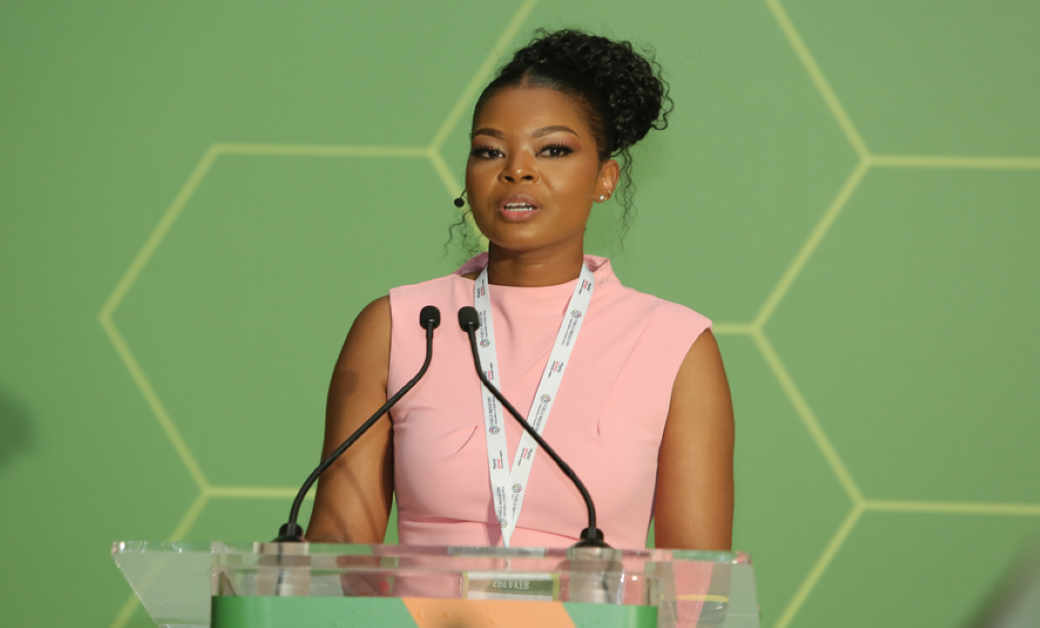
Every career journey is shaped by ambition, resilience, and a willingness to embrace new opportunities. In this edition of #CareerFocus, we feature Phila Mzamo, Head of Communications for the Fuels Industry Association of South Africa, to explore the experiences that have defined her career, the skills that have contributed to her success, and the lessons she’s learned as a communications leader.
1. Can you tell us about your career journey and what led you to become Head of Communications at the Fuels Industry Association of South Africa?
When I look back, my career has followed an interesting path. I often joke that I didn’t study engineering, yet I’ve spent most of my professional life working alongside engineers and technical experts. My first “real” job was as a Digital Marketer for a portfolio of specialist trade publications covering mining, transport and logistics, construction, water and sanitation, and other industrial sectors.
I later became a journalist reporting on the mining and transport industries before moving into an editorial role. I have also been fortunate to work in the hospitality industry, where I was responsible for communications across a portfolio of approximately 40 local and international hotels and resorts. These experiences gave me a solid foundation in understanding complex industries and, more importantly, in communicating technical or niche information in a way that is accessible, accurate and meaningful.
Today, as Head of Communications for the Fuels Industry Association of South Africa, I draw on every stage of that journey. My role extends beyond traditional communications. I work at the intersection of strategy, advocacy, stakeholder engagement and industry positioning, helping ensure the Association’s priorities are communicated with clarity, credibility and purpose.
2. What inspired you to pursue a career in communications, and what keeps you passionate about it today?
I’ve always loved language. Words can educate, influence, reassure and inspire. That fascinated me from a young age and ultimately led me to pursue a career in Communications. Like many young people, there were expectations around what I should study. My father initially encouraged me to pursue LLB, and I even had a brief stint in both Law and Commerce.
However, it quickly became clear that neither aligned with my interests or strengths. Once I had the opportunity to pursue the path I genuinely wanted, there was never any doubt in my mind. In fact, in my matric farewell journal, I wrote that I would study Media and Communications at the University of Cape Town. I was so certain that it was the right path for me that UCT was the only university I applied to.
Writing has always been one of my strengths, and studying English and Linguistics alongside my Communications degree only deepened my appreciation for language and its complexity. I often think my high school English teacher, Mrs Ferreira, would have been proud to know that I built a career around something she recognised and nurtured in me all those years ago.
What keeps me passionate about the work I do is the ability of communications to influence people, shape conversations and solve problems. Communications is never static, nor is it simply about writing. Every issue, stakeholder and strategic objective requires a different approach. I enjoy understanding complex environments, identifying what truly matters and developing communication strategies that support organisational objectives rather than simply creating content.
3. What does a typical day in your role look like?
No two days are ever the same, but everything I do is guided by the Association’s strategic priorities, which are refined annually by our Board. My role is to ensure that our communications and stakeholder engagement efforts support those priorities through strategic advocacy, industry engagement, events, media relations and thought leadership.
At the moment, much of our work is focused on South Africa’s Clean Fuels rollout ahead of its implementation on 1 July 2027. It is an exciting time because, as an industry and an association, we are working closely with government, industry leaders, and other stakeholders to navigate this transition, communicate progress, facilitate meaningful dialogue and ensure alignment on one of the most significant and complex changes the fuels sector has undertaken in decades.
One of the things I enjoy most about my role is that it requires both strategic thinking and practical execution. It is about seeing the bigger picture while ensuring the finer details are equally well managed.
4. What career achievement are you most proud of, and why?
One of my proudest achievements has been conceptualising and delivering the inaugural Fuels Industry Imbizo. The vision was to create a platform where industry leaders, government, regulators, academia and other key stakeholders could come together for meaningful and constructive conversations about the future of South Africa’s fuels sector.
Seeing that vision become a reality reinforced something I have always believed in, which is that communications is about far more than messaging. At its best, it creates the conditions for meaningful dialogue, stronger relationships and better decision-making.
5. What key skills have been most valuable in helping you succeed?
Strategic thinking, strong writing, relationship-building and sound judgement have all been essential to my career. However, I also believe listening is an underrated leadership skill. Curiosity has been one of my defining qualities throughout my career. Working in technical or niche industries has taught me never to shy away from complexity. Instead, I ask questions until I understand an issue well enough to articulate it with confidence.
This may sound unusual, but I also believe there is value in intentionally modelling yourself on people you admire. If there is a leader or professional whose presence, communication style or confidence inspires you, observe them. Learn how they present themselves, how they think, how they communicate and how they lead. You are not becoming someone else; you are developing your own professional identity by learning from those who do it well.
Many talented people remain invisible because they allow shyness or self-doubt to dictate how they show up. Confidence is often built through practice.
6. What has been your biggest career challenge, and what did it teach you?
One of my greatest challenges has been learning to trust my own judgement as my responsibilities have evolved. I have also learned that growth rarely happens inside your comfort zone. Some of the opportunities that have shaped my career came because someone believed in my abilities and entrusted me with responsibilities before I felt completely ready. Looking back, I am incredibly grateful they did. Those experiences taught me that confidence is often developed after you accept the opportunity, not before.
7. The energy sector is constantly evolving. How do you stay ahead and continue developing professionally?
If you aspire to become more than you are today, you have to remain a lifelong learner. Be a sponge for new information. I genuinely love learning. Podcasts have made it easier than ever to broaden my perspective, regardless of where you are in the world. That said, nothing replaces reading. I am currently reading Good to Great by Jim Collins, which explores the principles of disciplined people, disciplined thought, and disciplined action.
I also make a point of keeping up with current affairs because understanding the broader environment helps me become a more effective communicator. One philosophy I try to live by is to avoid being the smartest person in the room. Surround yourself with people who challenge your thinking and expand your perspective. Growth happens when you are willing to learn from others, and over time, your network’s collective knowledge becomes one of your greatest professional assets.
8. What advice would you give to young women who aspire to build a career in communications or the energy industry?
Firstly, visibility matters. You can be exceptionally talented, but if people don’t know who you are or what value you bring, opportunities may pass you by. Do good work, but also allow your work to be seen.
Secondly, recognise that the professional world is not always fair, and that it is structured. Take the time to understand how your industry operates, where opportunities exist and where you can create value that others may have overlooked.
Collaboration is another lesson I wish more people embraced. Many of us see asking for help as a weakness, when in reality, the most successful leaders actively seek out partnerships. They surround themselves with people who think differently, challenge their assumptions, and bring complementary strengths. Their greatest achievements are rarely accomplished alone; they happen because people intentionally seek to identify synergies and work together towards a common goal.
Finally, don’t let technical industries intimidate you. You don’t need to be an engineer to build a successful career in the energy sector. Industries like ours need professionals who can translate specialised concepts into language that resonates with business-to-business, but also from business to consumer. I also think it’s important to understand that communications is an incredibly broad and nuanced profession.
There is often a misconception that communications is about writing content or managing [social] media. In reality, and depending on your organisation’s objectives, it encompasses strategy, reputation management, stakeholder engagement, crisis communication, internal communication, public affairs and organisational change. An effective communications professional is agile; they don’t just tell stories, they build trust, influence, shape perceptions and help organisations navigate complex environments with clarity and purpose.
9. How important have mentors, sponsors or your professional network been in your career?
They have been invaluable. Something we don’t often acknowledge is that if you have a good manager, they should be your first reference of professional excellence. After all, they occupy that position for a reason. Observe them. Learn from them. Understand how they think and make decisions.
I’ve been fortunate to work with mentors, managers, and leaders who trusted my abilities. My friends and family often joke that my boss, without hesitation, is happy to throw me into the proverbial deep end without thinking twice. Looking back, however, those daunting moments accelerated my growth because they stretched me in ways I wouldn’t have chosen for myself.
That is probably one of the greatest gifts a mentor can give you. Provided they also afford you the safety of their council along the way. Mentorship, sponsorship and trust don’t just open doors; they help you become the person who can walk through them, confidently.
Outside of work, having a strong support system is equally important. My family and close friends are my sounding board. They celebrate the wins, but they’re also honest enough to challenge my thinking when necessary. You don’t need people who always agree with you. You need people who broaden your perspective, ask difficult questions, and keep you grounded.
10. How do you maintain a healthy balance between your professional responsibilities and personal wellbeing?
Balance is something I intentionally work on. My faith keeps me grounded and gives me perspective beyond my career. I also make time for the gym because looking after my physical wellbeing is just as important as looking after my mental wellbeing.
I am equally intentional about what I feed my body. Regular health and dietary check-ups are important because sometimes we are not functioning at our best simply because our bodies are lacking something or reacting to something we consume. All of this needs resources, of course, but where possible, invest in preventative healthcare.
The same applies to mental health. We often wait until we are overwhelmed before seeking professional support. Preventative care is always better than crisis intervention. Looking after yourself should not begin when everything starts falling apart; it should be part of how you live every day.
11. What message would you like to share with women who may doubt their abilities or hesitate to pursue leadership opportunities?
I firmly believe the universe rewards raw, audacious, unfiltered audacity. Too often we convince ourselves that we need one more qualification, one more year of experience, or one more sign before taking the next step. In reality, many opportunities come to those who are simply willing to put themselves forward.
Sometimes we watch someone else doing a job and think, “I could do that better.” The difference is that they took action. Even if they make mistakes, they receive feedback, learn, improve, and keep moving forward. Progress comes through action, not perfection.
Don’t wait for permission to pursue the life or career you want. Bet on yourself. That doesn’t mean being reckless. It means believing that you are capable of learning, growing, and figuring things out along the way.
12. Finally, what words of encouragement or career advice would you like to leave with other women who are determined to achieve their goals?
- Be intentional about the life and career you’re building,
- Protect your integrity because your reputation will often speak before you do,
- Invest in relationships,
- Remain teachable,
- You fall seven times, you [better] stand up eight.
Short Bio
Phila Mzamo is the Head of Communications at the Fuels Industry Association of South Africa. Based in Johannesburg, she directs the Association’s strategic communications, advocacy, stakeholder engagement, and media relations, actively shaping the dialogue driving the nation’s downstream petroleum sector.
An alumnus of the University of Cape Town with a foundational background in industrial journalism, Phila has built a distinguished career translating complex technical and policy matters into accessible, high-impact strategic narratives. Her expansive portfolio spans the energy, mining, transport and logistics, construction, and hospitality sectors, equipping her with a unique ability to navigate intricate regulatory environments and foster high-level stakeholder partnerships.
Most recently, Phila served as the Program Director for the inaugural #FuelsIndustryImbizo2026, where she anchored critical pan-industry conversations centered on market growth, sustainability, and structural transformation.
- Contact information – phila.mzamo@gmail.com
- Social media links – www.linkedin.com/in/phila-mzamo