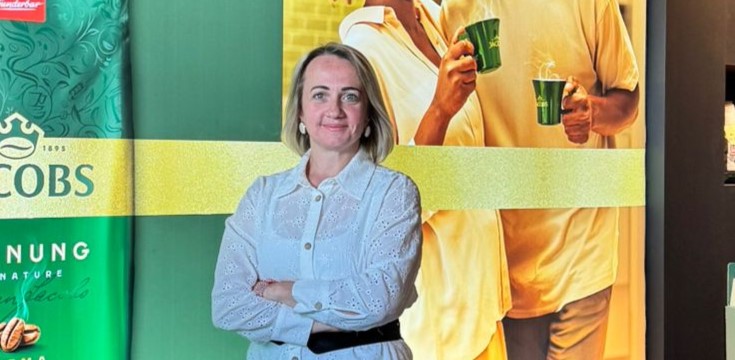
This week on #CareerFocus, we speak to Banu Erkorkmaz, Country Manager South Africa at JDE Peet’s, about leading a dynamic team, navigating the South African market, and the strategies that drive success in one of the world’s most iconic coffee and beverage brands.
1. What inspired you to pursue a career in the FMCG industry?
From the start of my career, FMCG felt like the right place for me. I’m someone who enjoys speed, complexity, and impact, and FMCG gives me all three. It’s an industry where you see the results of your decisions almost immediately in consumers’ daily lives. Over the last 21 years, working across iconic brands at P&G, Mondelēz, and JDE Peet’s has only strengthened my passion. The combination of data, consumer insight, and the chance to shape everyday habits is what continues to inspire me.
2. How did your background in Industrial Engineering shape your career path?
My Industrial Engineering degree shaped the way I think and lead. It gave me a structured, analytical mindset and taught me how to break down complex systems into actionable paths. Graduating as a High Honor student set the foundation for my obsession with operational excellence. Today, whether I’m managing South Africa and its export markets or redesigning route‑to‑market models, that engineering discipline helps me solve problems with clarity, precision, and efficiency.
3. What motivated your move from project and commercial roles into general management?
My transition into general management happened organically. When I first took over the Turkey business [initially temporarily], I realised how much I loved end‑to‑end accountability. Being responsible for the full P&L, market shares, strategy, teams, customers, and transformation gave me a sense of purpose I hadn’t experienced in narrower roles.
4. What key lessons did you gain while working at companies like Procter & Gamble, Mondelēz International, and JDE Peet’s?
From P&G, I learned discipline, executional excellence, and the fundamentals of brand building and customer management. The early sales roles built my resilience and sharpened my instinct for the realities of the FMCG industry.
From Mondelēz, I learned how to lead large, complex transformation programs. I managed a full corporate demerger, created a new legal entity, built a new organisation, and transferred SAP systems, all of which taught me how to lead at scale and under pressure.
From JDE Peet’s, I learned to challenge the status quo and focus on possibilities. How consumer preferences may vary from one continent to another. I learned that bold decisions, empowered teams, and clear strategic choices can fundamentally reshape a business.
5. What leadership lessons did you learn while serving as Country Manager in Turkey and the Baltics?
Turkey taught me ‘commercial agility’, being able to make difficult decisions under not-so-ideal circumstances. First entry into aluminium capsules and ready-to-drink cold coffee, leadership in e‑commerce, distributor transformations, and even an acquisition due diligence. It taught me courage, resilience, and how to lead teams through ambiguity.
Baltics taught me ‘cultural agility’. My team represented seven nationalities, which required deep listening, context sensitivity, and respect. Under my leadership, JDE Peet’s Baltics became the #4 most engaged organisation globally within JDE Peet’s, something I am immensely proud of. I learned that when people feel included, respected, and heard, performance follows naturally.
6. How has relocating to South Africa influenced your leadership perspective?
South Africa broadened my leadership lens even further. Managing 10 export markets in addition to South Africa means navigating diverse cultures, regulations, logistical challenges, and consumer expectations. It strengthened my belief in the power of local insight, flexibility, and high-performing teams.
7. What challenges have you faced as a woman in leadership, and how did you overcome them?
Throughout my journey, I’ve often been one of the few women in senior rooms. Earning credibility required consistency, resilience, and the courage to stay true to my leadership style. I overcame challenges by delivering results, but also by embracing my identity rather than trying to mimic traditional leadership models. Being a mother of two, leading across continents, and managing high‑stakes transformations taught me that women don’t succeed by doing more; we succeed by doing what matters most, with clarity and intention.
8. Why is empowering women in the retail and consumer goods industry so important to you?
Empowering women is deeply personal to me. I made a promise to myself [and to my mother] that I would always advocate for women’s advancement. During my Baltics tenure, I served on the DE&I Global Board of JDE Peet’s, and previously, I’ve been a founding member of LEAD Network Turkey. Because inclusion is not just something I believe in, it’s something I act on. The industry needs more women in decision‑making roles. Gender‑diverse teams outperform, innovate better, and build more relevant consumer solutions.
9. What role do mentorship and networks like LEAD Network play in advancing women’s careers?
Mentorship and professional networks give women what is often missing: visibility, confidence, sponsorship, and community. Networks like LEAD create safe spaces for women to grow, access role models, and unlock opportunities. My involvement helped me support women across Europe, Turkey, and Africa, and reminded me how powerful it is when women lift each other up.
10. What skills should young women focus on if they want to build global careers?
Three things matter the most:
- Influence without Authority: Global roles require aligning diverse stakeholders and leading with clarity.
- Cultural Agility: The ability to adapt, listen, and understand context.
- Courage: To take risks, relocate, change roles, and stretch beyond comfort zones.
Curiosity, humility, and continuous learning are also essential. My own global career was built on saying “yes” to the unfamiliar and trusting that I would grow into the challenge.
11. How do you stay motivated and resilient in a demanding leadership role?
I stay motivated by focusing on impact: building high‑performing teams, unlocking business growth, and achieving meaningful milestones. Seeing my teams win motivates me more than anything. Resilience comes from purpose and perspective. I also actively seek feedback, embrace challenges as opportunities, and stay anchored in the belief that possibilities grow when we remain open, humble, and curious.
12. What advice would you give women who aspire to leadership positions in global companies?
Be bold. Don’t wait to feel ready. Trust your instincts and step into opportunities even when they scare you. Speak up in the rooms where decisions are made. Lead with authenticity, not imitation. Build networks that empower you and empower others in return. And above all, lift other women as you rise. Leadership is not just about reaching the top; it’s about widening the path for those who follow.