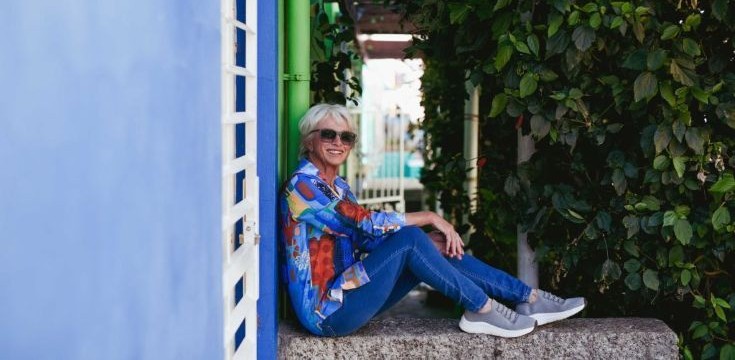
Jane Hudson, a Cape Town practicing psychologist of more than 25 years, is rolling out her debut novel, In the Name of Mother, to readers across South Africa from early 2026, and her story is as compelling as the book itself. Published by UK-based Olympia Publishers in late 2025, the novel is a psychological and legal drama spanning four continents, grounded in her beloved home city of Cape Town and the vibrant Bo-Kaap neighbourhood featured on the cover.
The book explores identity, family, ethical boundaries in psychotherapy, and a central homicide that drives both medical and legal tension. Hudson drew on decades of clinical experience to craft a complex protagonist shaped by mood and personality disorders, giving the novel rare psychological authenticity.
Her writing journey began unexpectedly after receiving a BBC Maestro subscription as a Christmas gift in 2023. Within a year, she had completed and published her first novel and signed a contract for the sequel.
1. You transitioned from a successful 25-year career in psychology to becoming a published novelist in your seventies. What gave you the courage to start something completely new at this stage of your life?
Like the female protagonist in my debut novel, I don’t usually run with the herd. I thrive on new challenges, that’s part of my nature. In the early 1970s, my first degree was in Economics. I was one of only four girls at our university who chose this route. As a young mother, I started and grew a business on my own, and in my mid-forties, I went back to university and studied Psychology. It’s the way I am, and the reason that my practice is focused on Positive Psychology.
2. Many women put their creative dreams on hold while building careers and families. What would you say to those who feel it may be “too late” to begin?
Eduplan, the business I built in the early 1980s, employed more than 100 young mothers on a part-time basis. It was a business that fostered early childhood development, and the women who joined me could relate to the business objectives. They all thrived.
It was wonderful to see the personal growth of these amazing women as they rejoined the working world and discovered confidence anew. It’s never too late, and once the children leave home, there is so much more time for Mom.
3. You completed your debut novel in just four months. What mindset helped you move from idea to action so decisively?
Like the Nike slogan, “Just do it,” that’s my way. When I’m working on a project or a mission, I become highly focused, and I just don’t quit. The exception was starting a PhD and then deciding that the timing was all wrong for me.
4. How did your years of professional experience as a psychologist empower you rather than limit you when stepping into the world of fiction?
I’ve worked with close to two thousand clients in my years as a psychologist. Together, they have taught me so much about human nature. They have also inspired and empowered me.
5. Was there ever a moment of self-doubt during the writing process, and how did you overcome it?
Not really. I didn’t set out to be a published author, so there wasn’t any external pressure. But once I began playing with words and enjoying the challenge, I dared to dream. I do remember browsing in a bookshop and imagining. Visualising the possibilities was a spur. It helps that I am a resilient person.
6. Your story is rooted in Cape Town yet spans four continents. How important is it for women to see their own cities, cultures, and lived experiences reflected in global narratives?
I think it’s affirming to feel relevant and recognised in the larger, global world. Others feel grounded in their own cities and local cultures. Each to their own.
7. What has this journey taught you about personal reinvention and embracing new identities later in life?
I like the idea that there are aspects of self that are unknown to self and unknown to others what some might see as the potential. At 45, I wasn’t convinced that I had all the interpersonal skills needed to be a successful psychologist. At 75, I didn’t imagine I had the creativity to write a novel. But if we don’t try, we’ll never know. And if it doesn’t work, you try again or try something different. There’s no shame in that.
8. How can women leverage the skills and wisdom gained in one career to succeed in an entirely different field?
I can’t speak for all women, but I believe that knowledge and wisdom are not only cumulative but also transferable. My Eduplan experience gave me the confidence to open a psychology practice, handle the marketing side, and manage the accounting functions. Working in the field of psychology has given me insights into human behaviour and the material to write novels. That wisdom also comes with life experience. There have to be some advantages to getting older!
9. You began writing after receiving a BBC Maestro subscription as a gift. What role do curiosity and continuous learning play in personal growth for women?
A huge role. I remember my dad saying to me at a very young age … “As long as you have an enquiring mind …”. Continuous learning, in any field, builds confidence and generally makes us more interesting.
10. Signing your first publishing contract and a second for your next novel must have been affirming. What did that milestone mean to you personally?
It was surreal. It still hasn’t quite sunk in that I am a published author, so I have experienced a bit of “imposter syndrome”. For me, writing was never intended to be a commercial venture, but if my books find an audience and sell well, that will be a bonus.
11. What advice would you give to women who are quietly working on a passion project but are hesitant to share it with the world?
Give it a shot … what have you got to lose?
12. Looking back on this unexpected writing journey, what does success mean to you now, and how has that definition evolved?
It’s humbling but also exciting, probably more so now than any previous successes. It’s only looking back that I can appreciate what I accomplished in other periods of my life. At the time, it didn’t seem such a big deal possibly because then it was mostly about earning a living. Now it’s something I’m doing simply because I love it so much less pressure.
About Jane Hudson
Jane Hudson was born in England but has spent most of her life in and around South Africa. Home is now a small marina on Cape Town’s Atlantic seaboard. She lives there with the boy she met as a teenager when sailing was their shared passion. Together, they’ve raised two children now both fully fledged adults.
A practicing psychologist for the past twenty-five years, Jane discovered her love of writing relatively late in life. With earlier careers in teaching and in business, along with decades of fascinating life experiences, she is well-primed to launch her debut novel, “In the Name of The Mother.”