1. Tell us a bit about yourself.
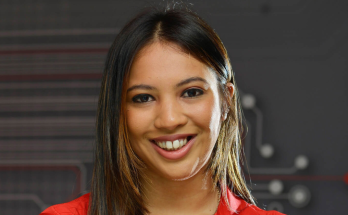
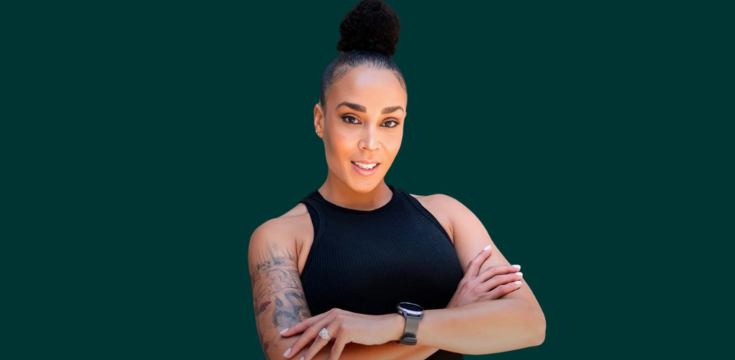
I’m a Cape Town-based tech copywriter, born and bred in Eersterust, Pretoria. We moved here just over 5 years ago, right before lockdown. I’m a boy-mom and co-parent to a smart, rambunctious 4-year-old who keeps us on our toes, and I’ve been with my husband of 9 years since 2008. When I’m not creating written or visual content, I’m out making memories with loved ones in one of the most beautiful places on earth.
2. What work do you do?
At Braintree, I specialise in simplifying B2B tech jargon by turning it into relatable storytelling and meaningful messaging. On paper, my job is to use my skill and talent to secure viable marketing- and sales-qualified leads. My aim (within my scope of work at Braintree) is to help business leaders and decision-makers better understand the untapped potential of the technology they’re avoiding or underutilising, to help further their business growth.
3. How long have you been in the industry?
5 years this year.
4. Has your work always been your passion? Tell us why.
I’d be lying if I said I’ve always wanted to be a copywriter (much less a tech copywriter), but I’ve loved writing since I could hold a pen. I briefly studied journalism after matric, but found it unfulfilling. I acquired a bit more life (and professional) experience, but never felt complete.
Supported by my Mom and husband, I started studying Communication Science in late 2017, whilst unhappily working in admin at an investment bank. On a Friday night in April of 2018, I received a random note from my COO.
It said, “Maybe the journey isn’t about becoming anything. Maybe it’s about unbecoming everything that really isn’t you, so that you can be who you were meant to be in the first place” (Paulo Coelho). On a whim, I drew up my resignation letter that night and officially resigned (without a job) the following Monday.
I attained my degree in 2020 and accepted a web design position at a friend’s company. Web pages require copywriting. I knew nothing about it at the time, but I was determined to make it to the end of my contract.
I taught myself the copywriting basics using LinkedIn and YouTube tutorials. I simply did not have the money to pay for extra courses at the time. I guess you could say I fell in love with copywriting by mistake. What’s meant for you will always find a way.
5. Being a woman in the industry – what does it take?
In short: grit, self-awareness, resilience, and a good sense of humour. Being a woman in any industry (and I’ve worked in several) means constantly reaffirming your worth to yourself first, because:
- Others will only meet you where you are,
- Once you know your worth, you’re less likely to accept treatment that trivialises, compromises, or undermines it, and
- You’ll no longer shrink yourself to be digestible, silence your voice for the comfort of those afraid of your growth, or dim your light because it’s in their eyes.
6. What has been the most difficult challenge of your career?
Absolving myself of the burden of others’ expectations and living unapologetically. I’ve learned that their expectations of me (good or bad) are based on their own insecurities, perceived shortcomings, projections, and perceptions. It’s their business, not mine.
7. What advice do you have for other women in your industry?
Your voice matters, so show up as your authentic self and speak up. Intentional visibility is important. Take credit where it’s due – demand it if necessary. You can’t lead if you’re always hiding in the shadows, waiting for someone to validate you, hoping they’ll notice your contribution, or praying they’ll acknowledge your value. They won’t… unless you do first.
8. Who inspires you in your industry?
Women who don’t wait for a seat at the proverbial table, but create their own, and then build a longer table instead of a taller fence.
In the communications industry:
Farah Fortune (Founder and MD, African Star Communications) is a South African mom and a powerhouse who founded one of Africa’s most successful PR and communications firms. Farah started her business on her bedroom floor with R1000 in her pocket, her cell phone, and her laptop.
She’s since grown her dream into a business that only hires women in a male-dominated industry. She walks the talk and actually helps women reclaim their agency. She has also created the Pad Run in support of young girls from disadvantaged communities in need of sanitaryware.
Per Farah, “I want to create a legacy of being a change-maker, not just within my industry, but also within the realms of possibilities for women. I want to make sure women are no longer underpaid, overworked, and undervalued. I want to be remembered as the woman who opened doors for other women. I knew if I didn’t create my space, no one would create it for me. Being a powerful woman is only valid if you use that power to help other women.” [Mail & Guardian]
9. What’s the best advice / key learnings you have received from your industry peers?
- Stop second-guessing yourself. Be confident in your decisions – no one will back you if you don’t back yourself.
- Fail forward – Make failure your best friend, and learn from your mistakes, because wisdom only comes from experience. Use your failures/mistakes as stepping stones, so you level up after each one.
- Speak up – your voice matters too. No one is you, no one has your lived experiences or your unique perspective and that is your superpower, your differentiator.
- Stop selling yourself short. If you must, fake it till you make it – because you will make it. Learning to swim while in the deep end is the best way to learn new skills, sharpen your talent, and prove yourself.
10. What is your leadership style?
My leadership style is situational because people are different, as are their strengths, weaknesses, and challenges. What might work for a self-assured, autonomous member of the team might also deflate a person still finding their groove. I read the room or the situation, then adapt accordingly.
Flexibility is a strategy, but there’s a fine line between supporting someone’s strengths and enabling behaviour that drags the team down. I’m all for meeting people where they’re at, but I’m also tuned in when someone’s consistently disrupting the energy or undermining progress.
In those moments, I have the conversation, address the impact, and create space for change. If the effort’s not mutual, I move forward with clarity and respect for the sake of the whole team. Much like copywriting, leadership is about understanding people and supporting them in a way that helps them grow, while ensuring business objectives are met.
11. Have you experienced failure in your career? If so, what lessons did you learn from that?
I once took on a project that wasn’t the right fit, and it taught me the importance of aligning values before saying yes. I took on clients who wanted creativity on paper but resisted any real change when it challenged their comfort zone. It’s tough to deliver meaningful work without room to explore or collaborate. Ultimately, the project fell flat, and I left it knowing I needed to be clearer about boundaries and expectations from the start.
More recently, I led a project I was quite invested in. It had the potential to open doors for emerging entrepreneurs. I underestimated how much support the team needed. I thought I’d empowered them by giving them space, but instead, I was constantly stepping in to fill the gaps. I stretched myself too thin, and the result left me burnt out. While the project had its wins, and we got some positive results, I also knew it did not live up to its full potential.
I took ownership and apologised. I had honest conversations, assumed responsibility, and reflected on what I could have done differently. Delegating well means knowing your team, staying close enough to support them, and being clear about expectations.
I learned to lead with more clarity and more intention. Every experience, even the ones that sting, has helped shape me. I have learned to ask for help, show up with sharper instincts, pay closer attention, speak up sooner, and hold the line on what makes good work possible.
12. What are your plans for the future?
In the near future, I will expand my impact by mentoring upcoming female writers. The aim is to help them grow and to guide them in a way that equips them to take my job. That’s the point of leadership for me: creating spaces for others to rise. If someone I’ve mentored ends up doing what I do, but better, that’s a win for me.
I’m also working on creating and launching a course focused on authentic copywriting, grounded in real-world experience. I want to help the next wave of storytellers build careers that feel purpose-driven and meaningful. Furthermore, I would like to go on to obtain a doctorate in Communication in the next few years, and push the boundaries of possibility within this industry, or at the very least help expand them, so future generations have it a bit easier than I did.