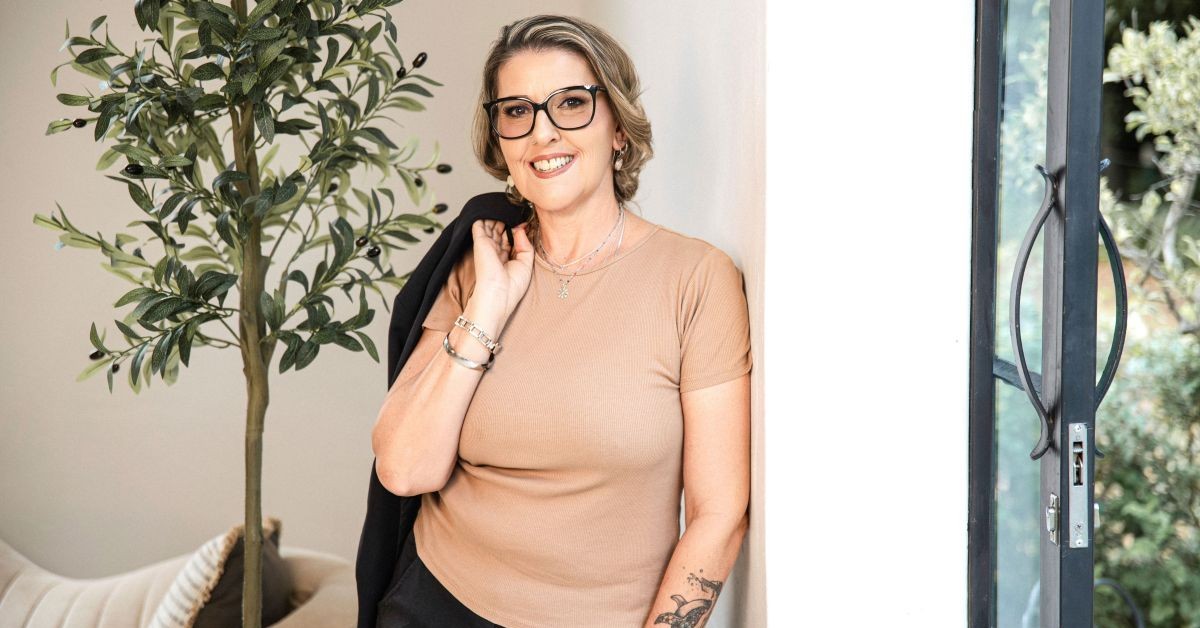
Many organisations invest heavily in technical capability. They strengthen systems, develop expertise and equip people to perform specific roles. But according to Dori Moreno, a growth strategist specialising in the development of individuals, teams and businesses, leadership itself is often treated as something that should happen automatically once someone receives the title.
Businesses will invest in technical training, systems training, or sales training, but often underinvest in the human skills that determine whether people can actually work well together: communication, emotional intelligence, self-awareness, listening, and ownership.
Moreno frequently sees individuals move into leadership roles and continue operating in the same way that made them successful before. They may have been promoted for delivering results or for remaining dependable under pressure, but leadership requires something different.
“Leadership on autopilot often looks like someone being placed in a leadership role and then carrying on as they always have. They do not necessarily stop to ask: What does leadership now require of me? What do I need to understand differently? How do I need to grow?”
As organisations grow, this lack of awareness often shows up in subtle ways. Leaders step in to solve problems, provide certainty and keep things moving, believing they are helping. Over time, however, others begin to adapt their behaviour around that person rather than around the needs of the business.
“Leaders often create dependency when they think leadership means telling people what to do. On the surface, this may look helpful, but over time the team learns to wait because experience has taught them that the leader may change direction, override them or take over anyway.
What looks like a passive team is often a team that has been conditioned by leadership behaviour to wait. Permission-seeking is not always a confidence problem. Often, it is a trust issue inside the system.” That pattern becomes even more visible in reactive environments where immediate demands begin driving responses instead of direction driving decisions.
“In reactive businesses, the tail starts wagging the dog. Immediate problems start driving the response instead of leadership setting the direction.” For Moreno, ownership is not built through control. It develops when people understand what is expected and know they will be supported.
Culture follows a similar pattern
Organisations may spend time defining values and desired behaviours, but teams pay far more attention to what is consistently demonstrated. “People follow behaviour. They do not follow rules on a wall. If leaders behave out of alignment, others read that as permission, and over time, the behaviour becomes the culture.”
Trust works in much the same way. While many leaders intervene because they believe they are saving time, the unintended consequence is that capability never fully develops around them. “Many leaders step in because they think they are saving time, but what they are really doing is failing to invest in the next level of leadership. Trust grows when people feel they can make decisions, learn and still be supported.”
Consistency, she argues, matters far more than perfection.
“There is a misconception that being under pressure and behaving like a chicken without a head is leadership. It is not. Calm leaders are far more effective. Leadership carries responsibility, and urgency does not have to mean panic.”
This is why Moreno views self-awareness as far more than a personal attribute. In her experience, it has a direct effect on performance because the emotional tone set by leaders shapes how decisions are made and how uncertainty is experienced.
“Self-awareness is not a soft personal trait. It is a performance issue.”
She adds that organisations also need to stop treating leadership development as a once-off intervention. “Sending someone on a one- or two-day course is not enough. Leadership is an ongoing practice. People need tools, support, honest conversations and spaces where they can keep developing how they lead.”
Ultimately, one of the biggest shifts leaders need to make is understanding that leadership is different from delivery. Completing tasks creates a sense of achievement, but leading others requires a different measure of success.
“A leader’s sense of worth has to move from ‘What did I personally complete?’ to ‘How did I show up for others and create the conditions for them to succeed?’ Stronger execution comes when leaders stop trying to be the best operator in the room and become more intentional about enabling the work of others.”
Moreno feels perhaps the most uncomfortable truth is that leaders often create the very behaviour they later criticise. “When leaders keep people small, they should not be surprised when people stop stepping forward. And if people stop stepping forward, no amount of strategy, communication or process will compensate for the loss of ownership.”
Leadership is not measured only by what leaders achieve personally. It is reflected in the clarity, trust and ownership they create around them. When people grow, businesses grow with them.