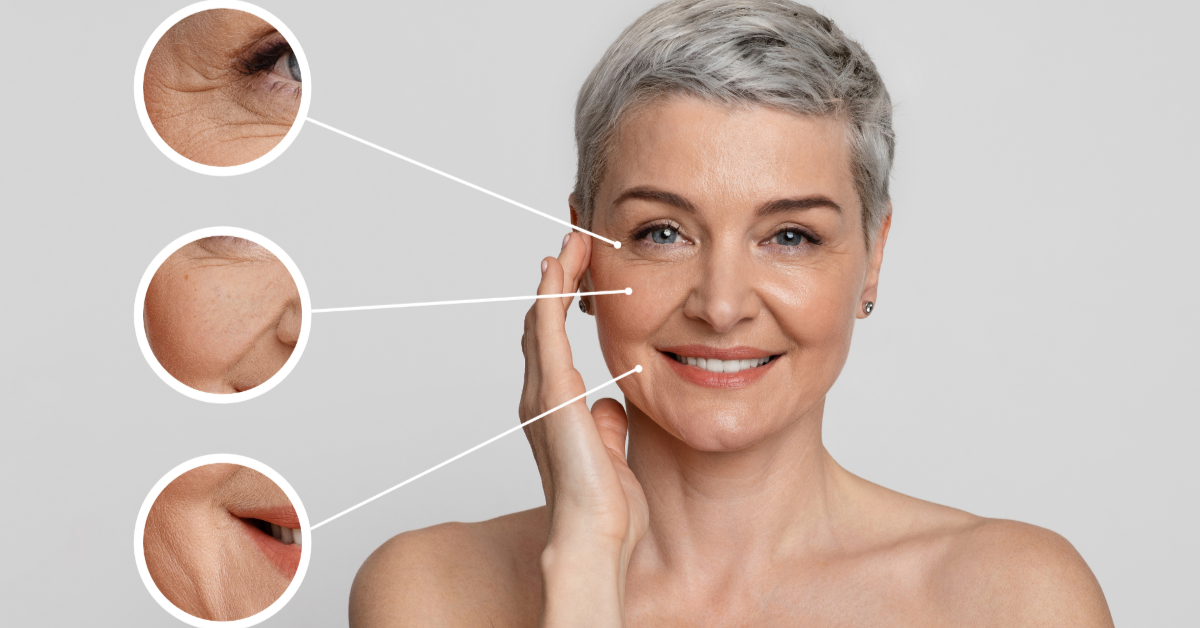
For decades, the beauty industry has sold us one powerful idea: fight ageing. From miracle creams promising to erase wrinkles to treatments claiming to “turn back the clock,” the conversation has often framed ageing as something to fear rather than embrace.
Fortunately, that narrative is changing. Today, the focus is shifting from looking younger to ageing well, a philosophy centred on maintaining physical, mental, and social wellbeing while preserving independence, confidence, and quality of life. The World Health Organization defines healthy ageing as the process of developing and maintaining the functional ability that enables wellbeing in older age.
It’s not about denying the passing of time, but about ensuring those years are lived as fully, actively, and healthily as possible. That same philosophy is reshaping the skincare industry. Rather than simply masking the visible signs of ageing, modern science is increasingly asking a different question: how can we help skin function more like healthy, resilient skin for longer?
Ageing is a biological process, not a flaw
The skin is the body’s largest organ, and like every other organ, it changes with age. Collagen production begins to decline from our mid-twenties, with estimates suggesting we lose around one percent of our collagen each year. Elastin fibres become less flexible, cell turnover slows, and the skin’s ability to repair itself becomes less efficient. Environmental factors such as UV exposure, pollution, stress, poor sleep, and nutrition accelerate these natural processes, contributing to wrinkles, pigmentation, dryness, and loss of firmness.
These changes are entirely normal, and the goal shouldn’t be to eliminate every line or wrinkle. Instead, healthy ageing is about supporting the skin, so it remains strong, resilient, and capable of repairing itself as efficiently as possible. Increasingly, dermatologists are moving away from the language of “anti-ageing” in favour of terms such as skin longevity, regeneration, and resilience.
The future of skincare is regenerative
For years, skincare innovation focused primarily on adding ingredients to the skin – hydrating agents, antioxidants, peptides, and retinoids that encourage healthier skin function. While these ingredients remain incredibly valuable, regenerative medicine is taking skincare one step further. Instead of simply supplying ingredients, regenerative skincare seeks to communicate with the skin’s own biological systems, encouraging it to activate its natural repair mechanisms. It’s an approach inspired by one of the most exciting areas of modern medicine: stem cell science.
Understanding regenerative medicine
Stem cells have attracted global scientific attention because of their remarkable ability to support tissue repair and regeneration. Interestingly, regenerative skincare doesn’t place living stem cells into cosmetic products. Instead, researchers have discovered that much of stem cells’ regenerative power comes from the signals they naturally release. These biological messengers include growth factors, cytokines, peptides, proteins, and antioxidants that communicate with surrounding cells, encouraging repair, reducing inflammation, and stimulating healthy tissue renewal.
Supporting skin from within
As we age, fibroblasts, the specialised cells responsible for producing collagen, elastin and hyaluronic acid, become less active. The regenerative signals contained within ADSC-CM help stimulate these fibroblasts, encouraging improved collagen production while supporting healthier extracellular matrix function. At the same time, they help reduce chronic inflammation, improve hydration, defend against oxidative stress and support recovery from environmental damage, including photo-ageing caused by ultraviolet exposure.
The result is skin that not only looks healthier but functions more effectively. Rather than focusing solely on reducing wrinkles, regenerative skincare aims to improve overall skin quality, its strength, resilience, texture, luminosity, and ability to recover from daily stress.
Healthy ageing is holistic
Of course, no skincare product can replace the foundations of healthy ageing. Regular exercise, balanced nutrition, quality sleep, sun protection, stress management, meaningful relationships, and staying mentally engaged all contribute to living well for longer. Healthy skin is simply one part of a much bigger picture. Confidence, independence, and wellbeing often go hand in hand. Feeling comfortable in your skin can encourage social participation, support mental wellbeing, and reinforce healthy lifestyle habits that contribute to successful ageing overall. Looking after your skin is therefore not an act of vanity; it is an investment in your long-term wellbeing.
Redefining what ageing looks like
Perhaps the most important shift is philosophical. Ageing well isn’t about chasing youth or pretending we’re not getting older. It’s about giving our bodies and our skin the support they need to function at their best throughout every stage of life.
For more information, please visit: Lamelle Research Laboratories