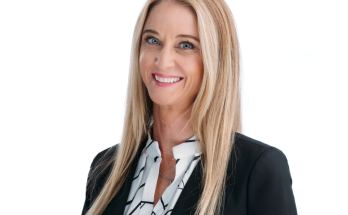
1. What inspired your journey into the social impact space, and how did it shape your career path to becoming CEO of the Prescient Foundation?
I was first exposed to the social impact space in Grade 10 when I had the opportunity to work with The Community Chest during the school holidays. What began as a short-term experience evolved into a long-term commitment, and I continued my involvement with the organisation into my second year at university. During this time, I progressed to leading a team of graduates within the grant assessment programme.
After completing my articles, I remained involved voluntarily, assisting with assessments of The Community Chest’s grant processes. This experience gave me meaningful insight into the socio-economic realities facing our country and the scale of support required, particularly in the areas of community development and education.
I joined Prescient in 2013 and, the following year, began volunteering with the Prescient Foundation. I had always felt a strong desire to work within the non-profit space, and in 2017, when the Foundation sought new leadership, I took on the role alongside my existing responsibilities.
At the time, the Prescient Foundation already had established programmes in place and required support primarily in administration, reporting, and overall oversight. This marked the beginning of my formal journey in stewarding and strengthening the Prescient Foundation’s work and impact.
2. What does a typical day look like for you as a leader, balancing strategy, partnerships, and community impact?
At the Prescient Foundation, a dedicated team of three staff members is responsible for the day-to-day work and management of the Prescient Foundation. In addition to this core team, we also leverage the deep expertise of Prescient’s broader organisation, including highly skilled teams across IT, Marketing, Legal, Talent, and Finance.
Central to our work are our partner beneficiaries. These partnerships are built around projects led by committed individuals and organisations who carry out the critical “on-the-ground” work within their communities. Their insight, proximity, and lived experience enable meaningful and sustainable impact within their specific focus areas.
A significant component of my role involves building, supporting, and maintaining these partner relationships, as well as identifying opportunities for collaboration across our partner network. By encouraging alignment and shared learning between partners, we are able to strengthen impact and extend the reach of our programmes.
Strategy is embedded in Prescient’s DNA, and the Prescient Foundation operates within a structured and intentional environment. This strategic approach ensures clarity of purpose, strong governance, and measurable outcomes. Ultimately, our impact is delivered through the collective efforts of our team and partners, working together to achieve lasting change.
3. What are the key leadership principles that guide your decision-making in a purpose-driven organisation?
The key leadership principles that guide my decision-making are:
- Exceptionalism: Strategic thinking and discipline are essential, as they enable you to focus on what matters most and perform at your best.
- Accountability, Trust, and Partnerships: We are accountable to our scholars, beneficiaries, and partners. We’re in it for the long run, and trust is essential for both support and to bring out the best in our beneficiaries.
- Resilience and Emotional Intelligence: Resilience and emotional intelligence are essential in a space marked by significant need and limited resources. We must remain empathetic while also being prepared to make difficult decisions.
4. How do you measure success in a role where impact often goes beyond financial metrics?
It’s a long game. We have several levers that we use to measure success. This includes partner relationships and how they have evolved, the collaboration that has emerged from them, and the growth across our programmes. We also look at the number of scholars graduating from our programme or the number of teachers that we support, backing themselves with education. We also look at how involved the larger Prescient Group is since the Prescient Foundation is the CSI arm of the Prescient Group.
At the core, our main measure of success is how much we’re able to give back through funding and support. We are in a privileged position to engage staff who are eager to give back through volunteering. This enables us to extend our reach, strengthen our offerings, and expand our programmes. Through this engagement, we also track the number of hours staff dedicate to Foundation activities.
We also drive a culture of giving back with our scholars and have seen many of them involved in our leadership programme, giving back, or giving back in their own communities.
5. What have been some of the most challenging moments in your career, and how did you navigate them?
One of my earliest challenges was completing my degree. My bursary did not cover the postgraduate diploma required for my articles, forcing me to choose between walking away or standing firm. I chose to advocate for myself, knowing it could mean having to repay everything. In the end, I was granted permission to continue, and the experience taught me the importance of backing yourself when the path truly matters.
Another defining moment came when I failed the final exam required to qualify as a CA. This was the first exam I had ever failed. It was a difficult setback, but the message from both my support system and myself was clear: get up and try again. That experience fundamentally reshaped how I understand resilience.
I was tested again when a role I was really excited about became available, but I knew I couldn’t accept it due to existing commitments. I chose honesty, trusting that what was meant for me would come at the right time. Six months later, I received another call asking if I was still available. Thirteen years on, I’m right where I’m meant to be.
I’ve often had to balance heavy workloads, prioritise effectively, and ensure that tasks were not just completed, but done well. How you perceive what you are facing is critical; every challenge can be seen either as an opportunity to grow or as a burden.
Over time, I have faced many challenges, but staying committed, acting with integrity, speaking life into difficult situations, addressing issues as they arise, and embracing every opportunity to learn have prepared me for those challenges and those still to come. My faith gives me perspective under pressure, clarity in decision-making, and resilience when the path forward is uncertain.
6. How do you ensure that the Foundation’s initiatives create meaningful and sustainable change rather than short-term impact?
An integral part of our project assessment is determining whether the investment will deliver sustainable, long‑term impact. As a result, we primarily engage in initiatives that demonstrate the potential for meaningful and lasting change. Our primary focus is education, as educating a child or a teacher creates an impact that extends far beyond the present moment. It’s a long‑term investment.
For our scholars, support goes beyond tuition. We remain in regular contact with parents, guardians, and teachers, provide job‑shadowing opportunities, and host an annual Scholars’ Day, where workshops are delivered to support their development. Where possible, scholars are paired with mentors from the Prescient Group to help them navigate academic challenges. Our programmes are intentionally designed around guidance, support, collaboration, and the principle of paying it forward.
7. What skills or qualities do you believe are essential for women aspiring to leadership roles in the non-profit or development sector?
Be grounded, humble, non-judgmental, and at the same time confident in who you are and willing to use your voice with a strong set of values and purpose.
- Be teachable but not easily influenced.
- Be willing to network.
Having both resilience and emotional intelligence to be empathetic but still make sound decisions. There is a lot of need but limited resources.
8. How do you approach collaboration with corporate partners to align business goals with social impact?
We find that many corporates that we partner with are looking for a meaningful way to invest in the social impact space. Some are looking for projects that align with their business objectives, but more specifically, projects that make a sustainable difference. The Prescient Foundation uplifts and empowers youth in the communities within which we live and work.
This is done by:
- Investing in the future generation through education, skills development, and youth-focused initiatives.
- Supporting community programmes that build resilience, opportunity, and sustainable growth.
Our programmes cover a wide range of NDP goals, including:
- Education and skills
- Poverty reduction
- Inequality reduction
- Active citizenship
- Institutional strength
- Social inclusion
9. What role does innovation play in addressing social challenges within your organisation?
Innovation plays a big role in addressing social challenges, but we take a balanced approach to it. We don’t look to recreate what’s already out there; we look more specifically at the type of project, its specific needs, and how we can innovate to maximise impact.
A key element of our innovation lies in our partnerships, where existing service providers are already making an impact, and we enhance this with our own capabilities. We also actively facilitate collaboration between partners, supported by the additional resources available through the Prescient Group.
We also design and run our own initiatives across our scholarship, leadership, and outreach programmes. These are tailored to create meaningful opportunities for Prescient staff to get involved, contributing their expertise, time, and hands-on support.
10. How do you maintain resilience and avoid burnout while working in a high-responsibility, impact-driven environment?
I find that structure, discipline, and purpose are essential to maintaining resilience and preventing burnout. Strategy and structure guide how we create impact, while discipline enables us to set clear outcomes and see them through over a defined period. In the NPO space, where needs are vast and resources are limited, it is critical to remain focused on what we do, why we do it, and how we implement it through a clear strategy.
11. What advice would you give to young women looking to build careers that combine purpose with professional growth?
- Be intentional about learning, and where possible, seek out mentors and sponsors.
- Be confident and own the space you are in, i.e., whether it’s a team meeting or a dinner table with CEOs.
- Work hard, not for recognition or individuals, but to consistently deliver your best.
- Take ownership. Mistakes will happen, and failure is inevitable; how you respond matters most.
12. Looking ahead, what legacy do you hope to build through your work at the Prescient Foundation?
I would like to leave behind a Foundation that is deeply embedded in Prescient’s culture. One where staff know that their work makes a meaningful difference in the lives of many. Our impact should be evident in the lives of the young people we reach, not only by changing their mindsets and circumstances, but by creating positive ripple effects within their families, schools, and communities.
These outcomes should be reflected in the many success stories that highlight the transformative power of education. I envision beneficiaries who embody the principle of giving back, i.e., individuals who pay it forward and become change-makers themselves.
Ultimately, the Foundation should be remembered as a values‑driven organisation: one that combines compassion with discipline, and heart with strategy. A Foundation underpinned by strong governance, sound financial structures, and robust systems, ensuring credibility, accountability, and the consistent upholding of our values.