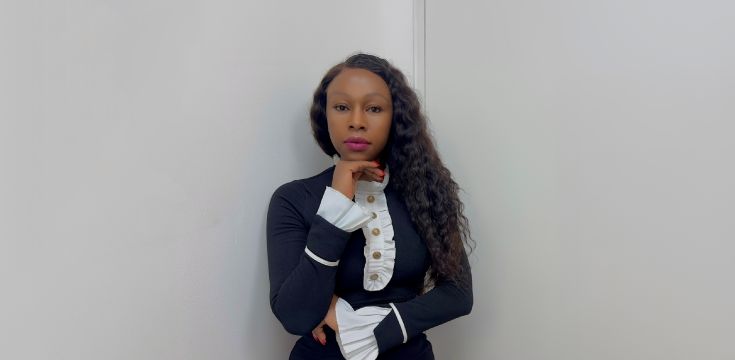
From rural Limpopo to leading global supply chains, she never gave up. From the dusty streets of Sekhukhune in rural Limpopo to global food processing and packaging, Modibo Matebane’s journey is a testament to resilience. As a Supplier Quality Development Engineer at Tetra Pak for the Europe, Middle East, and Africa (EMEA) region, she plays a critical role in safeguarding food safety and supplier quality across global markets.
Matebane’s path into engineering, however, was anything but straightforward. Growing up in a community with limited professional exposure, she initially saw pharmacy as one of the few viable career paths.
1. From Sekhukhune to Tetra Pak, what motivated you to keep going through the toughest moments?
I come from Sekhukhune, a rural part of Limpopo where dreams often feel distant and resources are scarce. My journey hasn’t been linear; it’s been marked by setbacks, detours, and moments of deep doubt. Dropping out of pharmacy was one of the hardest experiences of my life. I felt like I had let myself and my family down. But in that moment of despair, I made a decision: I would not be defined by any form of failure.
What kept me going was the belief that my story could be different, that I could rise, not just for myself, but for every young girl who grew up in a disadvantaged background, thinking that engineering was out of reach. Every challenge became fuel. Every obstacle reminded me of why I started. And every step forward was a quiet rebellion against the limitations placed on girls from rural communities.
2. What initially drew you to analytical chemistry, and how did that choice shape your career in engineering?
Analytical chemistry was my lifeline. It offered me a second chance, a way to rebuild my confidence and find my footing in the technical world. I was drawn to its precision, its logic, and its ability to make sense of complex systems. It taught me discipline, attention to detail, and the importance of data-driven decisions.
That foundation shaped everything that came after. Whether I was working in mining labs or leading supplier audits, the mindset I developed through chemistry helped me approach problems methodically and strategically. It gave me the tools to transition into engineering, and later into leadership roles where I could influence systems and people.
3. How did your early experience in mining labs influence your approach to quality and food safety today?
Mining labs were my training ground. I learned how to build systems from scratch, literally setting up laboratories, sourcing equipment, and managing operations. It was hands-on, high-pressure, and deeply technical. But more than that, it taught me the value of consistency, traceability, and accountability.
Today, in food safety, those lessons are more relevant than ever. I understand that quality isn’t just about meeting standards, it’s about creating cultures where safety is non-negotiable. My mining background gave me the confidence to challenge processes, ask the right questions, and implement systems that protect consumers across global markets.
4. What does a typical day look like when it comes to safeguarding food safety across global markets?
My days are dynamic and often unpredictable, but always purposeful. I might start with a supplier audit in Maghreb, followed by a session with the category teams in Europe, and end with a supplier Development activity with a supplier in Africa. Every task is connected by one goal: ensuring that we “protect what’s good”, compliant, and trustworthy.
I work with international standards like ISO, ASME, MPFC, etc, and I collaborate with the Project and procurement teams to align our efforts. Food safety isn’t just a technical issue; it’s a strategic imperative. And I take pride in knowing that my work helps protect millions of consumers every day.
5. What are some of the biggest challenges you face when auditing suppliers across diverse cultural and regulatory landscapes?
One of the biggest challenges is navigating cultural perceptions, especially around gender. In some regions, being a woman in a technical leadership role is still met with resistance. I’ve walked into supplier meetings where I was underestimated before I even spoke. But I’ve learned to let my work speak louder than any bias.
Regulatory differences also require constant learning and adaptability. Each country has its own standards, expectations, and ways of doing business. I approach every audit with respect, curiosity, and a commitment to collaboration. It’s not just about enforcing compliance; it’s about building relationships that drive long-term improvement.
6. How has continuous learning fuelled your career?
Continuous learning has been the heartbeat of my career. I come from a family that deeply believed in the power of education; my late grandfather always said, “ Education is the only tool out of poverty”. That belief has stayed with me, and it’s something I carry every day. I’ve experienced poverty firsthand, and I know how limiting it can be. That’s why I’ve always seen education not just as a tool, but as a lifeline.
There are actually a few key factors that have fuelled my commitment to learning. One of the biggest is working in a male-dominated industry. I’ve often found myself in spaces where I needed my credentials to speak before I was given the chance to. I wanted my qualifications to be undeniable to open doors, command respect, and challenge assumptions.
After completing my diploma in Analytical Chemistry, I kept pushing forward. I earned a B.Tech in Quality, then a Postgraduate Diploma in Project Management, followed by a Master’s in Engineering Management. Now, I’m pursuing an MBA focusing on Digital Transformation. Each qualification has helped me grow, not just professionally, but personally. It’s expanded how I think, how I lead, and how I solve problems.
In an industry that’s constantly evolving, staying curious is essential. Learning has helped me move from operational roles to strategic leadership. It’s given me the confidence to innovate, to mentor others, and to lead with impact. Every time I walk into a room, I bring not just my credentials, but the legacy of my grandfather’s belief and the drive to keep growing, no matter where I started
7. Have there been moments when you had to challenge gender norms in the workplace?
Absolutely. I’ve walked into meetings where people assumed I was there to take notes, especially when I’m accompanied by a male supplier manager or project engineer. The assumption is almost automatic: they’re seen as the technical lead, and I’m just there to support. I’ve had to prove myself over and over again. But I don’t let it discourage me. I see it as part of the journey.
What’s interesting is that after the meeting, they almost always go to my LinkedIn profile to check who I am and what I’ve accomplished. I get this all the time. I guess it’s the shock that comes with the assumptions people still hold in this industry. Every time I show up, speak up, and deliver, I’m challenging those norms. And I hope that by doing so, I make it easier for the next woman who walks into that room to be seen for her expertise from the start.
8. What are some misconceptions about engineering or food safety that you wish more people understood?
People often think engineering is just about machines, and food safety is just about hygiene. But both are far more complex. Engineering is about systems, strategy, and innovation. Food safety is about risk management, global standards, and consumer trust.
I wish more people understood the invisible work of the audits, the supplier development, and the cross-functional collaboration that goes into making food safe. It’s not just science; it’s stewardship.
9. You’re passionate about mentoring women in engineering. What advice do you give young women from rural backgrounds like yours?
I tell them that “Your background is not a limitation, it’s your strength.” Don’t let geography or circumstance limit your vision. Seek mentors, ask questions, and never stop learning. You belong in boardrooms, labs, and leadership. And when you get there, reach back and pull someone else forward. I always remind them that every barrier broken is a door opened for someone else.
10. What impact do you hope to make in the global supply chain or in transforming the industry?
I want to build an industry that is not only efficient but inclusive. I want to see more women, more Africans, more diverse voices shaping the future of food safety and engineering. Through digital transformation, mentorship, and quality leadership, I hope to leave a legacy of systems that work and people who thrive.
My impact won’t just be measured in metrics; it will be measured in lives changed, barriers broken, and futures reimagined.