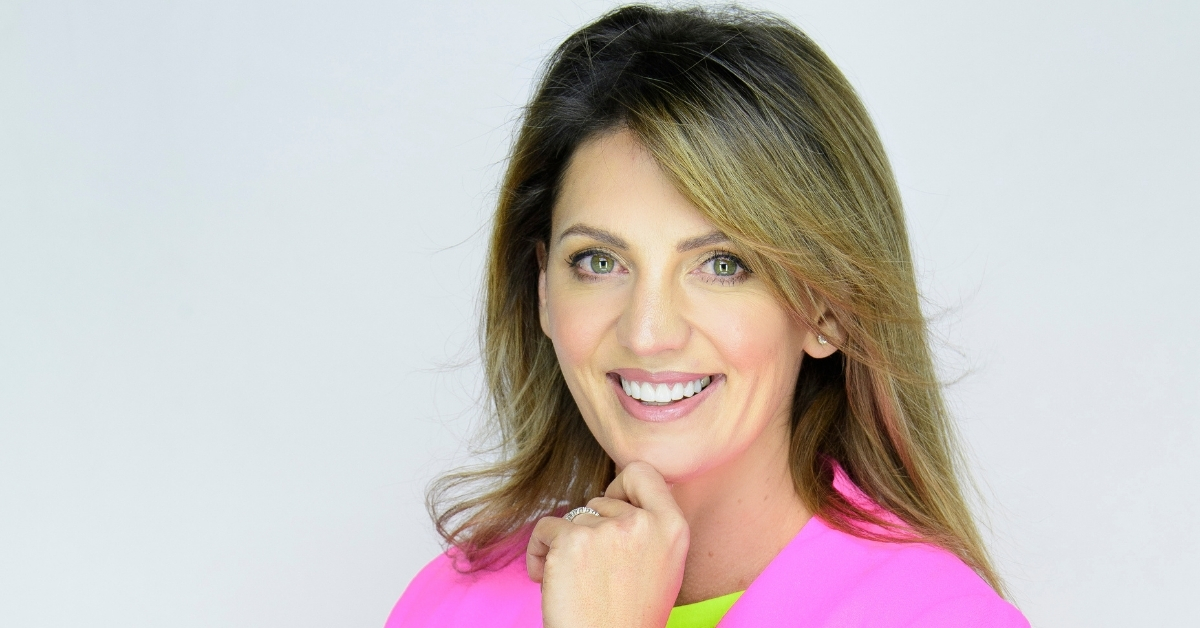
1. What inspired you to co-found Faith & Fear, and what industry gap were you hoping to address?
I’d spent over two decades inside traditional agency structures, and while I loved the work, the model itself kept frustrating me. Clients were paying enormous retainers for layers of management that weren’t adding value. Creative and strategic talent was getting diluted by process. And the industry had convinced itself that bigger was better, when most clients actually needed sharper, not larger.
Faith and Fear was born out of a refusal to accept that. My co-founder, Perri King, and I wanted to build something that put senior talent directly in front of clients, with none of the fluff. We call it a modular agency ecosystem, which sounds technical, but it’s really just a smarter way of working. We assemble the right people for the right brief, rather than keeping a 40-person team on retainer for a client who needs six specialists.
The gap we were filling wasn’t just structural. It was philosophical. Clients in South Africa, especially at the institutional level, were hungry for a consultancy that could hold strategic and creative thinking in the same hand. That’s what we built.
2. Faith & Fear is redefining the traditional agency model. How does your approach differ from conventional agencies?
The honest answer is that we work backwards from outcomes, not backwards from billable hours. A traditional agency often has a fixed team that gets assigned to your account, whether or not they’re the best fit for your specific challenge. You end up paying for availability rather than expertise. We don’t operate that way. Every engagement at Faith and Fear starts with a brief, and the brief determines who we bring in. That might be three people. It might be twelve. But they’re always the right twelve.
We’re also unashamedly senior. I’m on client work. Perri is on client work. You don’t sign with us and then get handed to someone two years out of university. That directness changes the quality of the thinking, and it changes the speed. There’s no Chinese whispers between what the client wants and what gets executed.
The other difference is that we genuinely integrate strategy and creativity. A lot of agencies are one or the other. The ones that claim to be both often mean they have separate departments that barely talk. We don’t separate them, because good work doesn’t come from briefs passed over a wall.
3. The name “Faith & Fear” is bold and thought-provoking. What does it represent to you and your business philosophy?
It’s the most honest description of how I’ve built everything I’ve ever built. Fear doesn’t go away when you start a business. It evolves. Early on, it’s “Can I get clients?” Then it’s “Can I keep them?” Then it’s “Am I building something that lasts?” Fear is always in the room. The question is whether you let it make decisions for you.
Faith is what you choose instead. Not the naive kind that pretends risk isn’t real, but the grounded kind that says: I’ve done the work, I know what I’m doing, and I’m going to back myself anyway. Faith is a daily decision, not a feeling.
So the name isn’t motivational branding. It’s a statement of operating philosophy. We take on briefs that scare us. We tell clients things they might not want to hear. We back our creative convictions even when there’s pressure to play it safe. That requires both faith and fear to be in the room. The fear keeps you sharp. The faith keeps you moving.
4. With over 20 years in the industry, what key lessons have shaped the vision behind Faith & Fear?
Three things stand out.
The first is that relationships outlast campaigns. The clients I’ve kept for years are the ones where we built real trust, not just delivered good work. Trust means you call me before the brief is written. It means I’ll tell you when I think you’re heading in the wrong direction, even if it costs me the job. That level of candour takes time to build, but it changes the nature of the partnership entirely.
The second is that creativity without commercial rigour is just art. I love beautiful work. I chase it. But if it doesn’t move the needle for the business, it’s not doing its job. Over two decades, I’ve learned to hold those two things together without compromising either.
The third is about ego. Yours, the client’s, the creative director’s. The moments that derail great work almost always trace back to someone’s ego taking over. I’ve learned to stay fiercely focused on the brief and the outcome, and to check my own ego at the door as often as I can. It’s a practice, not a destination.
5. How do you balance creativity and strategy to deliver meaningful results for clients?
I don’t think of them as opposites needing balance. Strategy without creativity produces documents that get filed and forgotten. Creativity without strategy produces beautiful things nobody can action. The goal is integration.
In practice, this means that I won’t let a creative team start executing before the strategic foundation is solid. And I won’t let strategy become a bureaucratic exercise that kills creative energy. The insight has to be sharp enough that it makes the creative idea almost inevitable. When you land on the right strategic territory, the creative work tends to find its shape naturally.
What I’ve learned with clients like Profmed and Liberty is that the most meaningful results come from work that earns attention rather than demands it. You do that by being genuinely relevant to people’s lives, not just relevant to the brand’s agenda. Strategy helps you identify that territory. Creativity helps you inhabit it in a way people actually care about.
6. As a women-owned consultancy, how important is female leadership and representation in the creative industry?
It’s not important as a political statement. It’s important because the industry produces better work when the people making decisions reflect the diversity of the audiences they’re trying to reach. South African consumers are predominantly women. They’re making purchasing decisions across financial services, healthcare, insurance, and FMCG. When the creative and strategic leadership shaping those messages doesn’t include women at the table in meaningful numbers, you get work that misses. Not always, but often enough that it matters.
Beyond the commercial argument, I think female leadership changes how teams function. In my experience, it tends to produce more collaborative environments, sharper emotional intelligence, and a greater willingness to ask difficult questions. None of that is universal, but it’s observable.
What I’m less interested in is representation as a metric. I don’t want to be in the room because the room needs a woman. I want to be in the room because I’m the best person for the conversation. That confidence is what I try to build in others through The Brave Collective, where the work is specifically about helping women know their worth before they walk into any room.
7. What challenges have you faced as a woman in business, and how have they shaped your leadership journey?
The most persistent challenge has been being underestimated. Not dramatically, not in obvious ways, but in the accumulated small moments. A client who talks past you to a male colleague. A room where your idea lands differently when a man repeats it ten minutes later. A pitch where your capability gets interrogated in ways it wouldn’t be if you were a man.
I spent years trying to adjust myself to fit expectations. Softer here, sharper there, less emotional in this context, more assertive in that one. It’s exhausting, and it quietly erodes something important. What shifted for me was writing Fearocious. Going through that process of putting my relationship with fear into words clarified something: the adjusting wasn’t making me better at my job. It was making me less effective because I was splitting my energy between doing the work and managing perception.
When I stopped, the work improved. My leadership is better because I’ve been underestimated. It made me concrete. I don’t rely on the title or authority. I rely on preparation and quality of thinking. That’s a harder path, but it produces a more durable kind of credibility.
8. What does courageous leadership mean to you in today’s business environment?
Saying the true thing in the expensive moment. Business environments create enormous pressure to manage up, hedge, qualify, and soften. Courageous leadership is the willingness to say: This campaign isn’t working, and here’s why. Or: this strategy is going to cost you market share if we don’t change course now. Or: the problem isn’t the brief, the problem is the internal culture that produced it.
That kind of honesty is expensive in the short term. It makes rooms uncomfortable. But it’s what clients are actually paying for when they hire a consultancy rather than an execution shop. They want someone who will tell them what’s real.
In my own business, courageous leadership has also meant being honest with my co-founder, with my team, and with myself. It’s meant to have hard conversations about what’s working and what isn’t, about roles and responsibilities, about the direction we want to build towards. None of that is comfortable. All of it is necessary. The leaders I respect most are the ones who can hold a difficult truth in one hand and a constructive path forward in the other. That combination is rarer than it should be.
9. What are some of the biggest leadership lessons you’ve learned while building Faith & Fear?
Don’t hire for capability alone. Hire for character and shared values first, capability second. You can develop skills. You can’t install integrity. Protect your culture deliberately. When you’re small and busy and chasing growth, it’s easy to let the culture drift. You make one compromise, then another, and suddenly, the thing that made you good at what you do is diluted.
I’ve learned to be much more intentional about naming what we stand for and holding the line on it. Know the difference between a business problem and a people problem. Most of the time when a client relationship is struggling or a project is off track, there’s a people dimension underneath. Address that directly instead of throwing more process at it.
And finally: your reputation is your only real asset in this industry. Not your deck, not your credentials, not your award shelf. Every client who has referred another client to Faith and Fear did it because of how the experience felt, not just what we delivered. Protect that with everything you’ve got.
10. What advice would you give to women who want to start a business but fear failure or taking risks?
I’d start by questioning the premise. Fear of failure isn’t a problem to solve before you start. It’s a companion you learn to work alongside. I wrote an entire book about this. The fear doesn’t go away when you launch. It doesn’t go away when you win your first major client, or your first award, or your first significant revenue milestone. It changes shape. The question is whether you’re willing to move anyway.
The most practical thing I can offer is this: get very clear on what failure actually looks like. Most women I talk to have a catastrophic version of failure running in their head, one that involves losing everything, being publicly humiliated, and confirming their worst fears about themselves. When you actually map it out, failure usually looks a lot less total. You’d have skills. You’d have relationships. You’d have learned things. You’d build again.
Start smaller than you think you should. Test the idea before you bet the house on it. And find women who are further along than you and talk to them honestly. Not the polished version. The real version. That’s exactly why I built The Brave Collective: because the conversations that change women’s lives happen in private, and they need to happen out loud.
11. What role do women-led businesses play in driving innovation and meaningful change today?
Women-led businesses tend to be built around problems that weren’t being solved, because they were problems that men in power didn’t experience.
That’s not a generalisation. It’s an observable pattern. Some of the most genuinely innovative businesses I’ve seen from women founders address gaps in financial literacy, in health, in workplace flexibility, in emotional wellbeing, and in community support. These aren’t niche markets. They’re vast, underserved, and commercially significant.
There’s also a style of innovation that comes from necessity. Women who’ve had to work harder to be taken seriously, who’ve had to build with fewer resources and less access, often produce businesses that are leaner, more resilient, and more connected to their actual customers’ lives. Adversity is a useful design constraint.
What I’d love to see changed is the access question. Ideas are not the constraint. Capital, networks, and rooms where decisions get made are still significantly less accessible to women. When that changes, the pace of innovation changes with it.
12. What message would you like to share with women who aspire to lead boldly and build purpose-driven businesses?
Your self-worth has to come before your net worth. That’s not just a Brave Collective tagline. It’s the most important business lesson I know. If you’re waiting to feel ready, you will wait forever. Ready is not a feeling. It’s a decision. You decide you’re ready, and then you do the work to back it up.
Build your network before you need it. The women who are moving fastest are the ones who invest in relationships consistently, not transactionally. Show up for other women. Make introductions. Champion the work. It comes back.
Be ruthlessly honest about what you actually want. Not what looks impressive on a funding pitch or what your industry values. What you want. Businesses built around other people’s definitions of success have a very particular kind of emptiness, even when they’re performing well.
And know your fear by name. Not as a vague feeling of anxiety, but as a specific story you’re telling yourself about what will happen if you try and fall short. Once you can name it clearly, it loses some of its power. You can disagree with it. You can act anyway.
That’s the work. It’s never done, but it gets lighter.