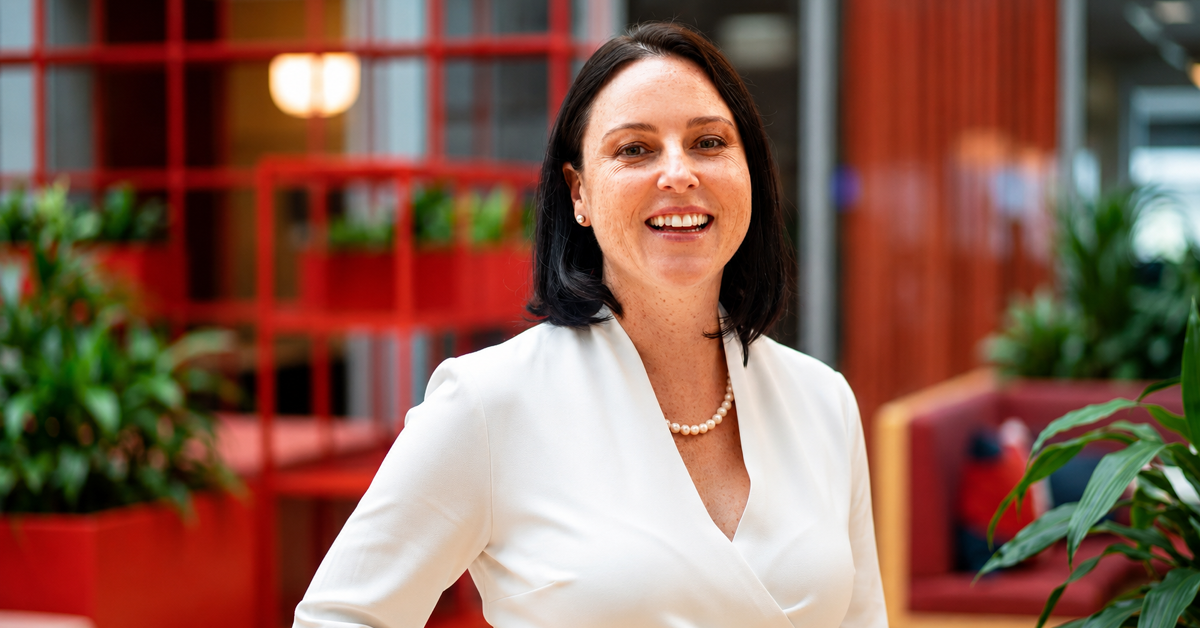
In this edition of #WIB (Women in Business), we chat with Rachel Irvine, Founder of Irvine Partners, about her entrepreneurial journey, the lessons she’s learned building a leading communications agency, and her insights on leadership, innovation, and empowering the next generation of women in business.
1. What inspired you to found Irvine Partners, and what was your vision from the start?
Irvine Partners came about after I moved back to South Africa following long stints in London and Moscow. The media landscape was shifting, and social media was starting to proliferate. I just knew in my gut the PR game was due for an overhaul, so I made the decision to move the agency I wanted out of my head and into reality, which led to Irvine Partners opening its doors in 2010.
Fast forward 16 years, and the agency has evolved from a bespoke group of PR professionals to a full-scale creative comms agency that services clients across industries and across many borders. While the agency has changed, the vision remained the same; for me, it was important to subvert the belief that impactful work and ideas come from the global north and filter down to the south. I wanted to show the landscape that an African-born agency has what it takes to compete on the global stage.
2. What has been the biggest milestone in your entrepreneurial journey?
Growing Irvine Partners from a bold idea in 2010 into a global player has been an incredible milestone. Being recognised internationally on the UK’s Women in PR 40 over 40 Powerlist and seeing our team named among the top tech and consumer agencies globally are immense markers of our growth. However, what I am most proud of and what represents our truest milestone is the fact that I have built a business that is wholly woman-owned and led, where our international team is diverse across countries, ages, races and ethnicities and women account for almost all of senior management across our markets.
This foundational structure is exactly what allowed us to recently defend our SABRE titles with a team that has grown leaps and bounds across creative, data, technology, and innovation. These milestones perfectly embody the culturally resonant work that we are proud to produce alongside clients, proving that our team can shape global narratives while bringing them back to their roots.
3. Can you share a defining challenge you’ve encountered while building the business and what it taught you about resilience and leadership?
Deciding to go wholly-owned or nothing as part of the DNA of Irvine Partners changed the depth of our cultural capital and fundamentally changed the work we can deliver. Choosing a wholly-owned model across multiple distinct markets instead of relying on loose local affiliates was an incredibly challenging path to walk.
It taught me that resilient leadership means having the courage to deviate from the traditional models and lean into the unknown. This defining challenge proved to us that when you invest deeply in local genius and place the right people in the right seats, you build an agile, specialised force capable of outmaneuvering monolithic industry giants.
4. As a female entrepreneur and CEO, have you encountered challenges that you believe are unique to women in leadership? How did you navigate them?
Absolutely. There is still an undeniable, often silent ceiling in our industry. While many entry and mid-level tiers are richly diverse, a quick look at the majority of C-suite positions shows they are still overwhelmingly occupied by men. For a long time, the unwritten rule was that women could climb, but only up to a certain point before running out of room.
The way we navigated this at Irvine Partners was by changing the narrative entirely. Instead of fighting for a seat at a table that wasn’t built for us, we built our own table. I don’t believe women have a ceiling; our capacity, innovation, and resilience are limitless.
For us, the proof is simply in the pudding. We let our growth, our global footprint, and the caliber of our work do the talking. By focusing on excellence, commercial success, and delivering undeniable results for our clients, we’ve proven that leadership isn’t defined by old corporate structures, but by impact.
5. What leadership principles or business philosophies have been instrumental in driving your business success?
My philosophy is simple: put the right people in the right seats on the bus, and then get out of their way and let them bring their local genius to the table. Success in communications is underpinned by cultural resonance, not boardroom theories. Additionally, I always push my team to think beyond simple vanity metrics and focus entirely on real-world impact. If you focus on the human truth beneath a campaign or a press release, you create work that genuinely moves the needle and matters to the people who matter.
6. Many women aspire to build businesses with international reach but don’t know where to start. What advice would you give entrepreneurs who are thinking beyond their local markets?
Don’t get intimidated by the scale of global locations. When expanding internationally, don’t focus on the logo or the location; focus on the human story and how you can translate your value across borders. If you want to break into culturally complex environments, you cannot rely on a generic, broad script. You need to find the cultural insiders, the people who live the realities of those markets and possess the authentic credibility to navigate those spaces.
7. How do you balance strategic decision-making with fostering a company culture that empowers creativity, innovation, and employee wellbeing?
By actively removing the pressure of performative “showmanship” from the creative process. When a team is stressed about keeping up a polished corporate facade, creativity dries up. The biggest threat to impactful creativity is comfort. I often remind our teams that our creative solutions to challenges that clients bring us don’t exist behind a screen but live out in real life.
Humans and our environments are deeply complex, and there is an infinite well of things to discover and learn from. Fostering a healthy culture means building an agile environment where teams feel safe to express vulnerability, embrace the unknown, and deviate from the script, knowing that no matter the country, challenge, or client, there is a group of people behind them always willing to collaborate meaningfully.
8. Mentorship and representation are vital for the next generation of women leaders. Who has influenced your career, and how are you paying that forward?
Mentorship isn’t just about offering advice from a distance; it’s about actively pulling down the barriers to entry that keep brilliant young talent on the outside looking in. Throughout my career, I’ve been profoundly influenced by the people around me the collaborative spirits, the resilient problem-solvers, and the leaders who didn’t just give advice, but gave me the tools and the autonomy to actually build something.
Today, paying that forward is a core mission for us. We recently welcomed our very first cohort of interns, the true next generation of industry leaders. We aren’t keeping them on the sidelines or giving them surface-level tasks. From day one, they are being embedded across every single department in the agency.
We are giving them the tools, the direct mentorship, and the real-world exposure to work on our biggest, most high-profile clients. For us, true representation means giving the next generation a real seat at the table early on, proving to them that there is no limit to what they can achieve.
9. Looking ahead, what opportunities do you see for African women entrepreneurs and business leaders on the global stage, and what needs to change to unlock even greater success?
The global market is transitioning away from massive, generalized broadcasting toward hyper-niche community architecture. Audiences are craving radical honesty and human edge over perfectly polished, corporate noise. This is a massive opportunity for African female business leaders, who possess immense cultural capital, resilience, and unique storytelling capabilities to grab the future of not just the continent, but a shifting global economy.
To unlock this, the global industry needs a shift in mindset. We must stop treating the Global North as the default hub for world-class innovation and start recognising and funding the local genius coming out of the African continent.
10. Finally, if you could leave one message for women who are building careers, launching businesses, or stepping into leadership roles, what would you want them to remember?
Stop waiting for permission; it isn’t coming, and you don’t need it. Every structure you’ve been told to climb was designed by someone no more capable than you, and it can be redesigned by you. So back your own judgment and build the thing that doesn’t exist yet.
And when you get there, leave the door open behind you. The real measure of your leadership won’t be the ceiling you shattered; it’ll be how many women never have to think about a ceiling at all, because you were there first.