Everyone gets snacky from time to time, with the space between meals seeming to stretch on endlessly. While snacking is by no means a problem, too often foods that are marketed as snacks are really unhealthy and don’t provide the right nutritional support.
To perform at our best, we all need proper nourishment throughout the day, with the need for snacks often arising. But it’s important to remember that fun food treats – for adults as well as children – are often high in sugar, unhealthy fats, and artificial additives, providing instant gratification but limited nutritional value.
Healthy snacks, however, nourish by providing essential nutrients, fibre, and hydration to support children’s growth and development. While treats provide enjoyment, it’s important to understand that snacks play a crucial role in filling the nutrition gaps between meals.
1. Healthy snack alternatives
Snacking should be viewed as an opportunity to provide nourishment, while treats should be offered occasionally to satisfy the desire for fun and enjoyment without replacing essential nourishment.
Healthy snack alternatives to sweet treats.
| Fun Food Treats | Snack Alternatives |
| Potato or maize crisps | Homemade popcorn |
| Ice cream cones with toppings | Frozen yoghurt with fresh fruit and nuts |
| Milk chocolate bars | Dark chocolate squares or cacao nibs |
| Cold drink or soda | Homemade Laager Tea4kidz Rooibos iced teas |
| Candy apple | Apple slices with nut butter (such as peanut butter) |
2. Snack portion sizes
When it comes to snacking, being mindful is key to maintaining a healthy relationship with food: Mindful snacking involves being aware of your eating habits, making conscious choices, and paying attention to portion sizes. It’s important to consider snack portion sizes for adults and children to avoid overindulgence and promote balanced nutrition.
Snacking tips for children:
- Establish structured snack times to avoid continuous grazing and mindless snacking.
- Ensure snack time isn’t close to meal time, as snacking too close to a main meal can discourage children from eating their meals.
- Prepare snacks in advance and portion them into appropriate serving sizes to help children understand and control their intake.
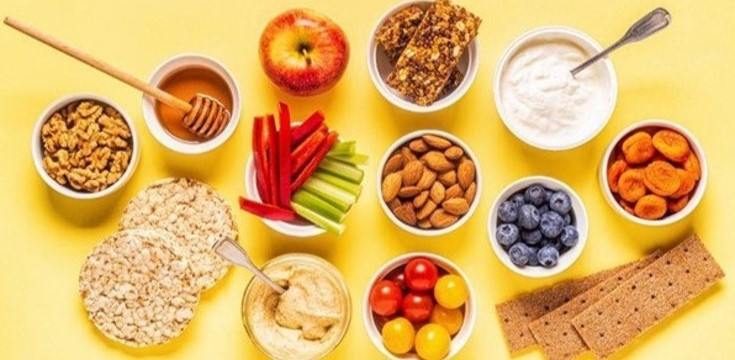
- Provide a variety of snacks, such as a mix of fruits, vegetables, whole grains, and protein-rich options to ensure a well-rounded snack that satisfies taste and nutritional needs. The variety may help with food freedom and improve the relationship with food.
- Teach children about portion sizes using visual references, such as comparing a serving of fruit to the size of their palm, or a handful of nuts as a portion.
Snacking tips for adults:
- Practice portion control by being mindful of serving sizes and avoiding eating straight from the package.
- Use small bowls or plates to help control portion sizes.
- Listen to your body’s hunger and fullness cues before reaching for a snack.
- Are you truly hungry, is it boredom, or are you sad?
- Tune in to your body’s signals to guide your snacking decisions.
- Choose nutrient-dense snacks with a balance of macronutrients (protein, carbohydrates, and healthy fats), rich in vitamins, minerals, and fibre to keep you satisfied and nourished.
- Avoid distractions such as watching TV, scrolling through your phone, or working while snacking. Focus on the sensory experience of eating and fully enjoy your snack.
3. The Importance of healthy hydration
Besides eating, it’s important to distinguish between thirst and hunger cues so that you’re not snacking for the wrong reasons:
- Drinking plenty of water throughout the day is beneficial to achieving optimal hydration.
- An excellent option is to include Laager Rooibos tea in your hydration routine.
- Laager Rooibos tea is a caffeine-free beverage naturally packed with antioxidants, making it an excellent choice for hydration.
For a range of healthy recipes, advice and tips visit www.joekels.co.za, or @LaagerRooibosTea on Facebook and Instagram.