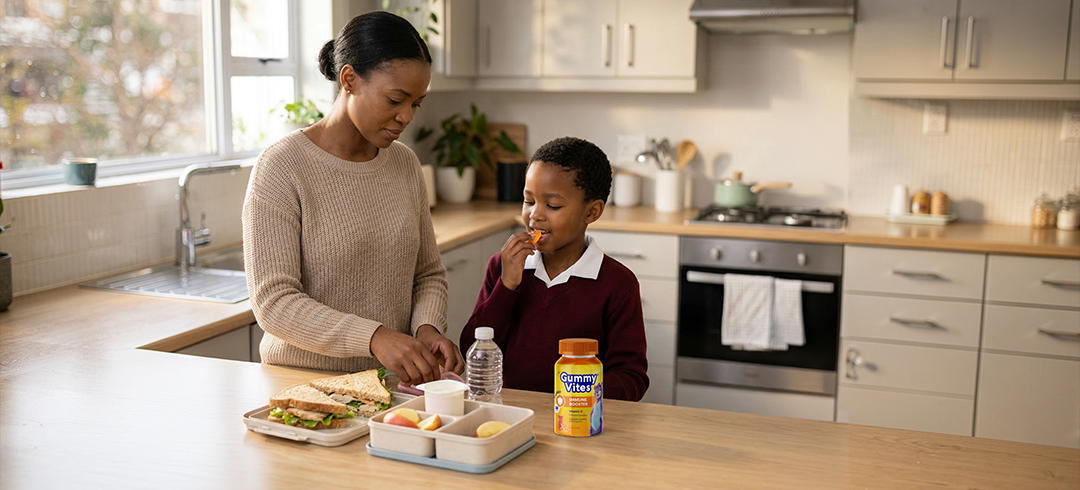
For many parents, it can feel as though one sniffle arrives and suddenly the whole household is juggling tissues, school bags, and broken sleep. The reassuring part is that child immunity support is usually built through a few steady habits, not one perfect product or one perfect week. Whether you are packing for crèche, primary school, or aftercare, the basics still matter.
Start with the basics of kids’ nutrition
Nutrition is part of health and development, and better nutrition is linked with stronger immune systems. Healthy eating patterns are built on adequacy, balance, moderation, and diversity. A variety of minimally processed and unprocessed foods sits at the centre of that approach, and variety across food groups helps children meet vitamin and mineral needs.
In real life, that can look like simple, familiar foods: oats, yoghurt, eggs, beans, lentils, fruit, vegetables, mielie pap with protein on the side, or a balanced lunchbox. It does not need to be fancy. What matters most is offering enough variety over time so the body has the nutrients it needs to support normal immune function.
Don’t underestimate sleep
Sleep is essential for a healthy life, and healthy habits start early. Children aged 3 to 5 should get 10 to 13 hours a day, 6 to 12-year-olds are advised to get nine to 12 hours of sleep regularly, while teenagers need eight to 10 hours regularly.
From an immunity point of view, sleep belongs on the checklist because it is part of the “optimal health” picture for growing children. A calmer bedtime routine, a fairly regular sleep schedule, and less screen time before bed can all help make good sleep more realistic.
Keep hygiene habits easy and routine-based
In South Africa, diarrhoea and respiratory infections are described as a major public health problem in children, and many of these illnesses are noted as preventable through simple hygiene practices. Handwashing with soap could protect about 1 out of every 3 young children who get sick with diarrhoea and almost 1 out of 5 young children with respiratory infections like pneumonia. Soap also removes germs more effectively than water alone.
That is why handwashing matters for immunity in such a practical way: it helps reduce the germs children are exposed to in the first place. Before meals, after the toilet, after play, and after coughing or sneezing are good times to keep reinforcing the habit.
Keep routine vaccination on the radar
Vaccination uses the body’s natural defences to build resistance to specific infections. Vaccines train the immune system to create antibodies, and they reduce the risk of disease by helping the body build protection.
For parents, this is one of the clearest examples of immune support that works with the body’s own response. If you are unsure about your child’s schedule, it is worth checking in with your healthcare professional.
Where kids’ vitamins can fit in
Food still comes first, and children need a wide variety of foods to get the energy and nutrients they need. Even so, some parents choose to include kids’ vitamins or children’s vitamins when dietary variety is limited, or routines are especially hectic.
For younger children, guidance states that those aged 1 to 4 years should be given a daily supplement containing 10 micrograms of vitamin D. Vitamin A supports a healthy immune system, and vitamin C supports general health and the immune system. That is why a children’s vitamin may be a helpful support option in some families, especially when you want a little extra nutritional reassurance rather than a replacement for balanced meals.
A gentle, practical approach is often best
Supporting immunity through the year usually comes back to the same simple building blocks: varied food, enough sleep, good hygiene, up-to-date vaccination, and sensible nutritional support where needed. For most families, the goal is not perfection. It is a routine that feels realistic, supportive, and sustainable.
Consider adding a high-quality children’s vitamin to your child’s daily routine as part of a balanced approach to wellbeing. Consult your healthcare professional if you have concerns about your child’s nutritional needs.
For more information on children’s vitamins, visit the Gummy Vites website here.