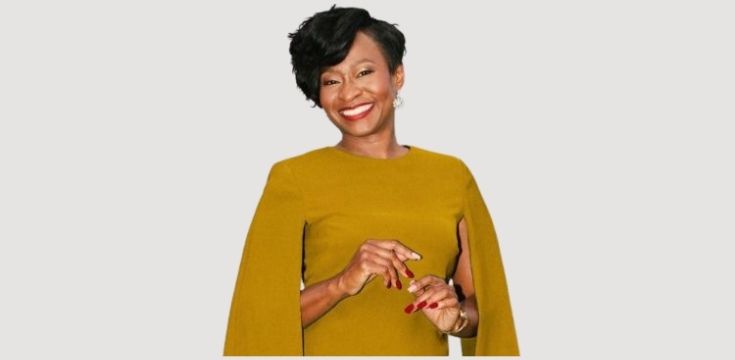
1. What inspired your journey to become the first certified Menopause Health & Wellness Coach in the Bahamas and Caribbean, and launch Menopause Survival Care?
For eight long years, I experienced severe menopausal symptoms. I went to 8 different doctors, and not one could tell me what was going on with me. No one told me that I was menopausal. Not only were those years lonely and very difficult, but they were very frightening. I did not know what was going on with my body. There were many moments I thought I was having a heart attack.
After finally learning that I was menopausal, with the help of God, I became my own rescuer (I was desperate for answers). I could not believe that menopause was something natural that happened to women. Yet I knew nothing of it. After questioning many of the older women, including my mother, who did not prepare me for this phase, and doing lots of research, I had so many questions.
Why were women embarrassed to talk about what they were going through in their bodies? Why were they ashamed? Why was it such a taboo subject? I realized that there were so many other women having similar experiences as I was. But no one was qualified to help the menopausal woman in my country and region. That’s when I realized I had to turn my pain into purpose. I decided to certify in the field. I wanted to help as many women as I could to not go through what I went through.
2. How did your personal menopause experience shape the creation of Menopause Survival Care and your upcoming book Menopause as Metamorphosis?
The pain of going through severe menopausal symptoms, being clueless, and not having help or support is a very dark place to be in. Menopause Survival Care was born to provide education, information, resources, support, and guidance to women. Unfortunately, 99% of the women in The Bahamas and Caribbean (and in most cultures) enter the menopausal transition clueless and unprepared to deal with the symptoms and changes their bodies will go through.
The inspiration for Menopause Survival Care stemmed from my quest for deeper answers to questions about menopause that extend beyond its symptoms and the prevalent negative discourse surrounding it. I sought to understand more about the Creator of our bodies. In this exploration, I was guided by nature and discovered many remarkable examples that illustrate how transition, transformation, and change occur for “advancement” and “improvement,” rather than as a form of punishment. These insights are shared in my book, “Menopause As Metamorphosis – What The Butterfly Knew.”
I also deep dive into the various cultures and how, throughout the centuries, they honored the older woman. The book also explores historically how menopause was misunderstood, medicalized, and silenced for centuries (from the 16th century) and how the legacy of the past still impacts today’s woman.
3. Why do you think menopause remains taboo in Caribbean communities, and how are you addressing that stigma?
The legacy of menopause being misunderstood is laid out in the book, and one can’t help but understand why we are, where we are with menopause (taboo, wrong thinking, embarrassment, etc). Though noteworthy, it is that the current generation of women is the first to speak out bodily about what is going on in their bodies.
I am addressing the stigma through education (seminars, webinars, 1-on-1s), as well as training. I have developed a Caribbean Menopause Ambassador Program where leading women in various communities will be trained and certified, and able to go into their communities and begin to be a support and be a part of a network of other Caribbean women who are also being empowered to empower.
4. What does “metamorphosis” offer as a reframing of menopause compared to conventional views of decline?
From the perspective of Menopause as Metamorphosis: What the Butterfly Knew, the word metamorphosis reframes menopause as a season of transformation rather than decline. Conventional views have long painted menopause as the beginning of deterioration, a time of loss, invisibility, and limitation. Society often focuses on what ends: fertility, youthful energy, or physical ease.
Metamorphosis, however, invites women to see this stage as a powerful awakening. Just as the caterpillar must enter the cocoon to emerge as a butterfly, menopause is a natural and divinely designed transition into a wiser, more authentic self. By embracing metamorphosis, women no longer see menopause as something to fear or fix. It is a time of emotional clarity, spiritual deepening, and the reclaiming of one’s voice and purpose.
5. How do holistic, natural approaches feature alongside medical options like HRT in your work?
I teach women that menopause is a natural transition in a woman’s life. It is not a medical condition, disease, or something wrong with a woman’s body. I teach that we have been suffering more from a lack of understanding of this phenomenal process. My approach to menopause is holistic and natural. I teach women to understand and listen to their bodies and respond with love, care, and understanding. Menopause is a time when a woman’s body is speaking…but she must understand the language of her body and respond appropriately.
6. How do symptoms such as sleep disturbance, anxiety, or weight gain intersect with menopause as a transformational phase?
Symptoms like sleep disturbance, anxiety, weight gain, and mood swings often feel like obstacles, but in the framework of menopause as a transformational phase, they are signals, not punishments.
- Sleep Disturbance
- Anxiety and Emotional Swings
- Weight Gain or Body Changes
7. What role do peer support and community (e.g., Menopause Survival Care groups) play in normalising menopause?
Peer support and community play a vital role in normalizing menopause because they break the silence and isolation that often surround this life stage. For generations, menopause has been treated as a private struggle or a sign of decline, leaving women to navigate their experiences alone. Groups and Organizations like Menopause Survival Care provide:
- Validation and Shared Experience – Hearing other women openly share their symptoms, challenges, and victories makes each woman feel seen and understood.
- Knowledge Sharing and Practical Guidance – Communities help women learn from each other’s experiences and adopt lifestyle practices that work in real life, beyond clinical advice.
- Emotional and Spiritual Empowerment – Safe, supportive spaces allow women to release shame, embrace their transformation, and reclaim menopause as a natural and meaningful season.
- Collective Advocacy and Normalization – When women come together to talk about menopause, it shifts cultural narratives, influencing families, workplaces, and even policy to better support midlife women. Through peer support and community, menopause is no longer a hidden “problem”; it becomes a shared journey of metamorphosis, celebrated rather than feared.
8. Can you share a transformational client story from your coaching programs?
Most definitely. I have been able to help so many women on the verge of mental and emotional breakdown. I have helped them to understand what was going on and that they were not losing it. I have been able to personalize protocols based on their symptoms and work with them. Women have come to seek me out who did not want to go on antidepressants but preferred natural and holistic means to deal with the menopausal transition.
I met a teacher who heard me on one of the radio stations. She felt she was losing it, she said the doctors made her feel like she was “going crazy”. And she had begun to accept that narrative. Her marriage, her job, and her personal life were all collapsing. She was not functioning fully. I worked with this woman (1:1 session, educated her, placed her on a protocol based on her symptoms). And after a month, she was fully functional. Operating as a teacher and no longer losing it.
She said to me, “I feel like a bird who was once caged and now I’m free.” She kept thanking me. When I was looking at her, saying this, she looked like a different woman from the one I had originally met. I have encountered women, two in fact, who stopped speaking. One stopped speaking for an entire month and did not utter a word.
The second woman said it was a two-week period that she, too, had stopped speaking and not uttered a word. I have found that educating women. About the full perspective of menopause. It is the beginning of healing, understanding, and transformation.
9. What under-discussed symptoms or themes do you spotlight in your book?
In my book, I intentionally spotlight the less-discussed emotional, spiritual, and generational dimensions of menopause that often go unacknowledged in conventional conversations. While most resources focus primarily on hot flashes or hormone therapy, I bring attention to:
- Emotional Unraveling and Clarity
- Cognitive and Creative Shifts
- Spiritual Awakening
- Generational Impact
- The Weight of Silence and Social Stigma
By shedding light on these under-discussed themes, my book empowers women to see menopause as a whole-person metamorphosis, mental, emotional, physical, and spiritual.
10. How can blogs and independent media help shift menopause from taboo toward empowerment?
Blogs and independent media are powerful tools to shift menopause from taboo to empowerment because they give women the space to tell real stories, share knowledge, and change the narrative outside of traditional medical or mainstream channels.
- Breaking the Silence
- Educating with Relatability
- Amplifying Diverse Voices
- Creating Peer Support & Movements
- Driving a Cultural Reframe
11. What cultural nuances or Caribbean perspectives are featured in Menopause as Metamorphosis?
As a woman from The Caribbean (i.e., The Bahamas), my book brings a Caribbean lens to menopause, highlighting experiences that are often missing in mainstream discussions:
- Community and Storytelling
- Faith and Spirituality
- Natural Remedies and Holistic Living
- Cultural Silence & Stigma –
- A Global Invitation from a Caribbean Voice
12. As you launch the book, what kind of collaborations, guest posts, workshops, and partnerships are you seeking?
I am seeking collaborations and partnerships that align with the mission of reshaping the narrative of menopause from one of decline to one of transformation, empowerment, and spiritual awakening. Specifically, I am looking for: guest posts and features, podcast and webinar opportunities, workshops, masterclasses, as well as partnership collaborations.
Through these collaborations, I aim to build a global movement where women not only read the book but also join the conversation, creating ripples of transformation in their homes, workplaces, churches, and communities.
Short bio:
Patrice Lockhart is a Caribbean-based (The Bahamas) Menopause Health & Wellness Coach, speaker, and advocate. She is the first certified menopause specialist in The Bahamas and the founder of Menopause Survival Care.
Her work focuses on empowering women to navigate menopause with clarity, dignity, and spiritual purpose. Her latest book, “Menopause As Metamorphosis- What The Butterfly Knew,” will be available on Amazon beginning August 29th, 2025. Get your copy and join the Menopause As Metamorphosis Movement.
Download her free menopause-balancing drink recipes: www.menopausesurvivalhelp.com/mrnodrinks