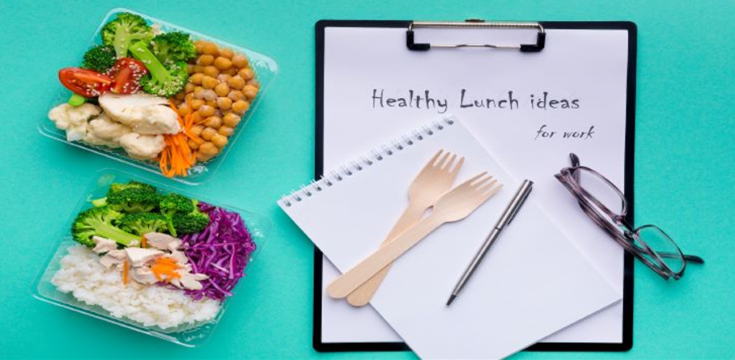
The weekday challenge is all about finding the balance between our work, home, and family demands. Facing severe time constraints and competing agendas, we have to still find smart ways to eat well, avoid unnecessary snacking and be as physically active as possible during the working weekdays. This highlights the importance of starting each day with a healthy, nutrient-rich breakfast – even if that’s breakfast on-the-run, or just popping a yoghurt and a fresh fruit in your handbag for snacking on the way to work.
Planning our lunch meal and any snacks for the day helps to keep our healthy eating on track and keeps our focus on nutrient-rich whole foods, making sure we are including fresh, seasonal produce. Taking time to prepare our own weekday meals at home, using the many good ideas and time-saving hacks that are easy to find, enables us to avoid buying high-fat takeaway meals loaded with refined carbohydrates and fats because we’re hungry, in a rush and it’s the most easily available food.
Looking for ways every day to be physically active such as taking the stairs or walking to meetings if possible also makes an incremental difference towards our overall healthy lifestyle goals. This daily attention to eating well and developing the habit of being physically active every day is critical for South Africans. The data from the latest South Africa Demographic Health Survey (2016 SADHS) reveals that 62% of women between 15 and 49 years of age are overweight and obese.
Nutrient deficiencies are another indicator of nutrient-poor diets, and the same study found that 33% of these women were anemic which results from iron deficiency in the diet. A review of micro-nutrient status and dietary intake has shown deficiencies of 22% in Vitamin A and 20% in iodine for South African women of reproductive age.
The 11 South African Food-based Dietary Guidelines provide a simple framework to help maintain a healthy diet, assist in keeping weight in check and make nutrient-rich food choices. They highlight five types of food that should be included in our daily diet – starchy foods as part of most meals; plenty of vegetables and fruit; legumes such as dried beans and lentils; dairy such as milk, maas, and yoghurt; lean meat, eggs, fish and chicken.
Too often though, the typical South African diet is found to have little variety of foods and a low intake of vegetables, fruit, and dairy, while processed foods, sugary and salty foods as well as drinks high in sugar are consumed all too regularly.
The benefits of whole foods
Whole foods are foods that are minimally processed or not processed at all, such as fresh vegetables and fruits, milk, eggs, whole grains, and legumes. The benefits of whole foods are that they are naturally complex, nutrient-rich foods providing a spectrum of nutrients that our bodies need to maintain healthy functioning. The health benefits of whole foods are more than the sum of their nutrients.
Taking charge of your workday lunches and snacks
Ideally, whether you’re still working from home or are back at the office, lunchtime is the chance to also take a mental break. Taking a half-hour to relax and eat a tasty, healthy meal can energise you, both physically and mentally. One of the pitfalls of working from home can be that you forget to take a proper lunch break, choosing to order food that may be nutrient-poor, and then scoffing down a takeaway in front of your screen.
If you’re back at the office, you’re probably experiencing long days out of the house again including extended travelling times which can disrupt your daily program and healthy eating goals.
Planning healthy options for lunch by shopping for whole food ingredients over the weekend and prepping the meals and snacks when you have the time avoids last-minute lunch or quick snacking decisions, which tend to be less healthy. Planning your lunches over the five-day span of the week enables you to think well about portion control which is really important for reaching and maintaining a healthy weight.
Focus also on both the nutritional value and convenience of your food choices. For example, adding a dairy component to your lunch or snack such as a small yoghurt or a portion of cheese is easy to do, and it will boost your daily intake of important nutrients such as calcium, potassium, and Vitamin A. Many South Africans struggle to meet the Recommended Daily Allowance (RDA) of Vitamin A.
It’s important to note that Vitamin A is a fat-soluble nutrient, and therefore it will only be present in full-cream dairy products. Of course, budget is also a big consideration, and creating your own daily lunch pack has the advantage of being more cost-effective. There’s no question that it is cheaper to make your own wholewheat cheese and tomato sandwich at home and bring it with you to work.
Top Tips for healthy workday lunches and snacks
Daily calcium requirements: 900 – 1200mg Ca (depending on age and life stage)
- Plan, shop, and prepare your weekday meals on the weekends
- Save money by packing your own daily snacks and lunches
- Avoid situations where you are dashing out to buy food on the workday when you are hungry as this can easily lead to poor food choices
- Focus on nutrient-rich whole foods and include fruit, veg, milk, and whole grains
- Avoid high-fat, highly processed foods, and takeaways
- Add dairy options daily such as milk, cheese, yoghurt, and maas
- Be mindful of portion control
- Take a mental break and relax while eating your lunch
For more dairy ideas join the Rediscover Dairy Facebook page: www.facebook.com/RediscoverDAIRY