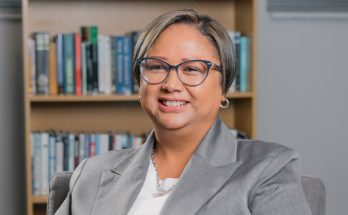
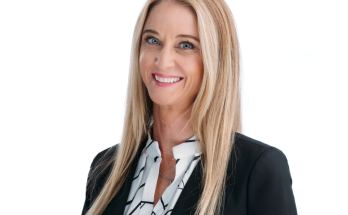
1. What inspired your journey into venture capital and investment?
I grew up in a family of entrepreneurs. My aunts and uncles ran businesses that directly changed people’s lives. Through the Allan Gray Orbis Foundation, I learned how entrepreneurship could be a force for broad-based change, a way to create not just profit, but sustainable jobs. I didn’t start with a single, neat solution; I started with a stubborn desire to help businesses grow. Venture capital became the vehicle: a way to turn that desire into sustainable jobs and real, measurable impact.
2. How did your background in community development shape your investment approach?
Early volunteering put me face-to-face with the brilliant people blocked by inefficient systems and zero access to finance. It taught me to look past pitch-deck polish and ask: who benefits, who’s included, and what changes on the ground? That perspective shows up in my term sheets: fairer structures, practical support, and an insistence on access, not just returns.
3. What does being a Partner at Aions Ventures mean to you at this stage in your career?
It’s a dream come true. It means I get to actively contribute to building an ecosystem where capital flows to underrepresented but high-potential founders. At Aions, we’re leveraging trends like blended finance and impact investing, both of which are reshaping the South African VC landscape to give entrepreneurs more than money: we give them tools, networks, and scalable platforms.
4. Why is it important to direct capital to underfunded, high-potential entrepreneurs?
Because that’s where real transformation happens. Between 2018 and 2022, less than 5% of South African early-stage VC went to all-female founding teams, and only about one-third to all-Black teams, despite these groups being the majority in the population. Directing capital here closes structural gaps, fuels innovation in underserved markets, and taps into what I call “grit-backed ventures,” businesses already de-risked by their founders’ resilience
5. What challenges have you faced as a young Black woman in the investment space?
Early in my career, I was often underestimated before I was heard, sometimes read as “too young” before I was read as “capable.” Representation in decision-making is still thin; in sub-Saharan Africa, only 12% of senior general partners are women, so it’s not unusual to be the only woman of colour at the table. That can mean your perspective is treated as “niche” rather than integral.
Access to certain rooms often depended on relationships I hadn’t inherited. I had to let results speak: closing gaps, executing deals, and building a track record with founders who would work with me again.
6. What shifts are you seeing or driving in South Africa’s VC landscape?
From collateral to real transactions: There is a move from collateral-heavy lending to transaction-based funding. More investors are underwriting real activity purchase orders, invoices, and recurring revenue rather than just a founder’s balance sheet history.
Blended and catalytic capital: Corporates, DFIs, and VCs are increasingly partnering to bring in private money for SME growth, particularly in supply chains. This blended approach de-risks investments and makes it possible to back ventures in sectors and communities that might otherwise be overlooked.
Inclusion as an edge: Diverse investment teams and ICs are slowly growing, and it’s improving pipeline quality and decision-making. At Aions, we’re pushing this shift with automated diligence, risk-sharing structures, and founder-friendly terms.
7. How do you balance financial returns with social outcomes?
It starts with structuring for both from the outset. South Africa’s impact-oriented funds are showing that “double bottom line” investing is viable and, in many cases, a competitive advantage. We back businesses with clear unit economics and clear end-beneficiaries (jobs, local suppliers, access).
8. What advice would you give to young women wanting to enter VC or finance?
Start with your edge sector knowledge, operator experience, or analytical strength, and build a visible track record. Find sponsors, not just mentors, people who will say your name in rooms you’re not in.
And remember: you belong; let your preparation prove it.
9. What does transformation in the investment sector truly look like to you?
For me, transformation isn’t about ticking boxes; it’s about shifting real influence. It means intentionally developing more women, especially Black women, into the investment space and ensuring their voices genuinely shape capital allocation. Progress has been made, but the numbers are still too low.
True transformation directs capital to historically excluded founders, builds decision-making tables that reflect the nation’s demographics, and redefines how we judge investment merit. It’s the rise of Black female fund managers like those from SAVCA’s programs and proof that backing underserved founders can deliver strong returns.
10. What does Women’s Month represent to you?
It’s gratitude and responsibility. Gratitude for the women who marched so we could choose our paths; responsibility to widen those paths for the next generation. For me, it’s a reminder to fund with intention so that talented women don’t need permission to lead, only an open door and fair capital.
Short bio
Karabo Makete does not spend much time thinking about job titles, but even she acknowledges it is not something you see often: a 29-year-old woman helping to steer venture capital firm Aions Ventures. As Partner and Investment Principal, she is aware of what her role represents in an industry that still has a long way to go when it comes to inclusion.
Born in Pretoria and raised by a family of entrepreneurs, Karabo’s journey into investment began not in the boardroom, but within her community, where she saw the lack of access to funding small businesses had to remain afloat.
After completing both her undergraduate and honours degrees in Urban and Regional Planning at Wits University, Karabo took a less conventional route into finance. First, through public sector development and later through consulting, where she focused on investment analysis and business development projects. As a scholarship recipient through the Allan Gray Orbis Foundation, she was exposed early on to entrepreneurship, problem-solving, and the kind of mindset that would later inform her work in venture capital.