POWA AND JOKO RUNNING HEALING DAYS THROUGH THE #ENDDOMESTICSILENCE INITIATIVE.
One of the programmes forming part of the #EndDomesticSilence initiative being run by Unilever tea brand, JOKO, and People Opposing Women Abuse (POWA) are Healing Days. Happening in all nine provinces of South Africa, Healing Days involve domestic violence survivors coming together to discuss their experiences of abuse and their healing journeys. This way, they heal themselves as they heal others and are empowered in the knowledge that they are not alone.
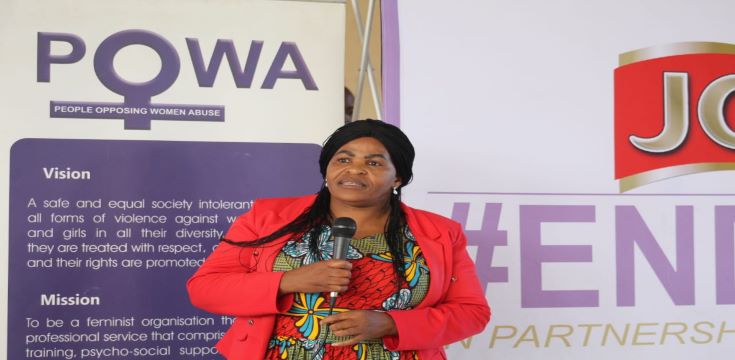
A Healing Day was held at Barolong Hall in Thaba Nchu in the Free State on 12 April 2022. It was attended by POWA staff, the South African Police Service, various NGOs, and gender-based violence (GBV) survivors supported by Batho Ba Lerato (People of Love in Sesotho), an organisation providing counselling and legal advice for GBV survivors and support groups for caregivers of people with mental and physical disabilities among other services.
Batho Ba Lerato is just one of 14 NGOs, working in GBV hotspots countrywide, that POWA has partnered with through the #EndDomesticSilence initiative. This partnership has involved training them on numerous aspects of domestic violence, assisting them to improve their governance structures, and hosting Healing Days.
Kate Mocheki, Head of Projects at POWA, says Healing Days give GBV survivors the opportunity to share their stories in a safe space that is non-judgmental and supportive. “It’s very beneficial for survivors to share their stories to assist them to let go of their traumatic experiences and gain strength, comfort, support, and learn from each other,” she says.
During the Healing Day in Thaba Nchu, survivors spoke openly about their experiences of abuse and how they triumphed over them. Litlhare Semoli (50), from Botshabelo, spoke of falling pregnant through rape and then marrying her rapist because she felt ashamed about having a child outside wedlock. “He regularly hit me and once beat me so badly, I had to give birth early. He didn’t financially support me or the baby and often told me he loved someone else. Women must take care of themselves and not depend on a man,” said Litlhare, who is now a paramedic and has written a book on her life.
At Healing Days, survivors also write about issues troubling them on pieces of paper, which are then burnt to symbolise forever releasing them from their heads and hearts. Additionally, there are traditional songs and a candle-lighting ceremony in memory of women who have lost their lives at the hands of their partners.
“The Healing Day helped me realise that so many other women have also been abused,” says Litlhare. “The candle lighting ceremony eased some pain caused by my friend being murdered by her husband.”
Healing Days, which have happened throughout South Africa since September 2021, will continue running throughout the year. In our deeply wounded society, with alarmingly high rates of GBV and femicide, their importance can’t be overemphasised.
One of the first Healing Days was with abused women counselled by Nhlayiso Community Health and Counselling Centre in Limpopo, on 21 September 2021. It has numerous services including, but not limited to, GBV campaigns, counselling and support groups for survivors as well as dialogues on issues affecting communities. They also run programmes with men and boys highlighting the importance of respecting women.
“Abused women sometimes don’t express their emotions because they think they’ll be stigmatised,” says Basani Ngobeni, a social worker at Nhlayiso Community Health and Counselling Centre. “The #EndDomesticSilence initiative is encouraging them to talk about their experiences, so they find healing. Many told me the Healing Day made them feel like they were releasing burdens from their shoulders, that it healed their souls and lifted their spirits.”
A Healing Day was also run together with the Schoemansdal Victim Support Centre in Mpumalanga on 22 October 2021. Among the centre’s range of services are counselling and sheltering for women and children as well as outreach to empower communities about GBV.
“I think a Healing Day should be added to our national calendar,” says Sindi Mhlanga, a social worker at Schoemansdal Victim Support Centre. “It’s so important to do this because people are dealing with a lot and have been through so much. The day will give us all a platform to voice out our trauma, the thoughts and feelings it brings, and the healing journeys we have travelled. Our country needs a lot of healing.”
Lucinda Evans is the founder and CEO of Philisa Abafazi Bethu (Xhosa for Healing Our Women), in Lavender Hill, Western Cape, which runs various programmes, including, but not limited to counselling and life skills for mothers, children, and youth raised in violent households as well as a programme where GBV survivors are taught non-violent methods of disciplining their children. “The Healing Day held on 18 November 2021 was deep, impactful, and learnsome,” she says. “It provided a space to talk honestly and openly about the importance of dealing with generational violence, so domestic violence that has become normalised in many households, stops. I want to hold an annual Healing Day.”
Survivors supported by Marang Information Centre in Kuruman, in the Northern Cape, also benefited from a Healing Day on 24 November 2021. In addition to providing counselling, the organisation’s programmes include career development, study tips, HIV/AIDS and GBV camps, community dialogues, and youth camps.
“The Healing Day was powerful and touching,” says Mpho Lekgetho, the Project Coordinator at Marang Information Centre. “It made survivors eager to tell their stories within the broader community to inspire others to end the silence around domestic violence.”
In KwaZulu-Natal, one was held with women supported by the Social Workers’ Empowerment Training and Support (SWETS) in Inanda on 29 November 2021. SWETS offers counselling and one-on-one mentorship to youth among other services. “The beautifully decorated tables and goodie bags made the survivors feel so special,” says Nolizwi Potwana, Head of SWETS. “While the candle lighting ceremony was about honouring women who have died at the hands of their partners, we must remember that domestic violence cannot only cause loss of life, it can also cause a woman to lose her limb, self-esteem, peace of mind and patience with her children.”
Neliswa Poqani (36), who is staying at a POWA shelter, spoke at the Healing Day in Johannesburg on 21 January 2022. She was stabbed 28 times by an ex-boyfriend. Her next partner threatened to kill her and her five children, but they managed to run away and then he burnt himself in their home leaving all their possessions to ashes.
The Healing Days continuing throughout 2022 will assist GBV survivors to get the healing they need.
For more visit: www.powa.co.za