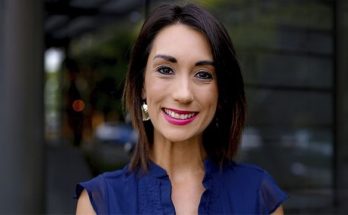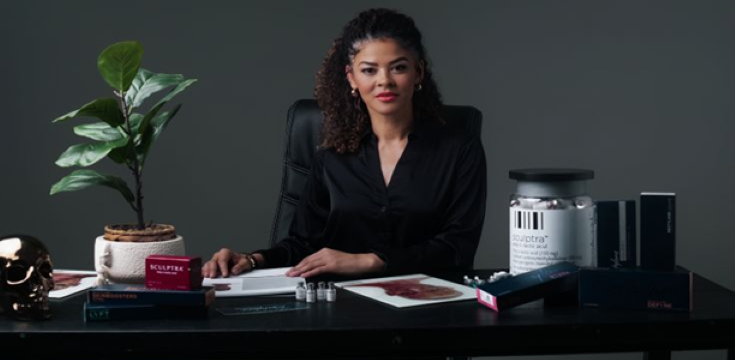
In this #CareerFocus feature, we speak to Dr. Hilla, a qualified medical doctor (MBBCh, Stellenbosch University) with advanced postgraduate training in Aesthetic and Anti-Ageing Medicine, both locally and internationally. With over a decade of specialised experience, she has built a strong reputation for her ethical, safety-first approach to facial aesthetics, championing natural, balanced results that enhance rather than alter. Passionate about preserving individuality and celebrating ethnic diversity, Dr. Hilla’s work reflects a thoughtful blend of medical expertise, artistry, and integrity.
1. What first inspired you to believe that a career in medicine was possible for you?
When I look back, I realise how important my father’s approach was in shaping how I think about my abilities. In my case, I would say it was more of a “who inspired you,” and without a doubt, it was my father. I was encouraged in a way that always felt supported but never pressured. There was no pressure to perform, only steady support and trust.
That balance gave me the freedom to grow in confidence, develop my own agency, and to develop a deep belief that any career path was genuinely possible for me. As I moved through my formative years in school, my quiet confidence in my academic abilities met curiosity. My fascination naturally gravitated towards the sciences and ultimately led me to apply to study medicine at the University of Stellenbosch. Medicine felt like a natural direction rather than a forced choice.
2. How did growing up in an under-resourced environment shape your determination to study medicine?
Growing up, my environment felt completely normal to me. It didn’t feel under-resourced because it was all I knew at the time. It was only later, when I began seeing how life operated beyond the confines of my small-town upbringing, that my perspective started to shift. Seeing what was possible outside of that world sparked a desire in me to grow, to prosper, and to create a different future for myself.
Hard work had always come naturally to me, but during my formative years, studying and focusing became more than just academic effort; it became a source of comfort and a way of coping within a challenging environment. I understood early on that education would be my pathway forward, and I used every resource available to me to support my growth. I didn’t have the privilege of tutors, but what I did have was a group of equally driven, hardworking peers. We would gather after school to support one another, particularly in challenging subjects like mathematics and physical science.
That sense of shared determination was incredibly empowering. Together, we developed a collective belief in what we were capable of, and we encouraged one another to aim higher. Looking back, that experience shaped not only my determination to study medicine but also my appreciation for resilience, collaboration, and making the most of what you have.
3. What advice would you give young women who feel their circumstances limit their dreams of becoming doctors?
Circumstances may shape your journey, but they don’t define your potential or your worth. Where you grow up or what you have access to might shape your path, but it doesn’t define you. What matters most is consistency, focus, and a belief in yourself that you are often required to hold long before anyone else does. If the desire to become a doctor is there, trust it, even if you don’t yet know exactly how you’ll get there.
You don’t need perfect conditions or endless resources to begin. Start with what you have and focus on what’s in front of you. Use what is available to you, your time, your curiosity, your discipline, and build quietly, step by step. Small, consistent effort matters more than brilliance or privilege.
Most importantly, don’t let the absence of opportunity convince you that you are incapable. Many of the qualities that make a great doctor, resilience, empathy, and discipline, are often built through challenge. Medicine needs women who understand these qualities that are often forged in the very environments that feel limiting at first.
4. How did you stay focused on your goals after experiencing such profound personal loss at a young age?
Losing both of my parents before I had even finished school was profoundly painful, and there were times when that loss felt completely incapacitating. Grief doesn’t follow a straight line, and I certainly didn’t move through it perfectly or quickly. But giving up on my own growth was never something I allowed myself to consider. I came to understand, quite early on, that I didn’t have a safety net.
There was no backup plan and no one who could build a future for me; that responsibility rested with me alone. As difficult as that realisation was, it gave me clarity. It helped me focus on taking manageable steps forward and doing the best I could, even if it was only for that day. I could have let the pain consume me, but instead I chose to let it move me. Over time, that choice made again and again became the force that kept me focused on my goals and moving forward.
5. What did studying medicine teach you about your own strength and resilience?
Studying medicine taught me that strength is built quietly, over time. The long hours, late nights, sleep deprivation, and personal sacrifice required me to show up again and again, often when no one is watching and there’s very little immediate reward. Medicine is a discipline that demands grit and a willingness to keep going in the service of others, even when you are tired or stretched.
It also taught me that progress is rarely instant. Rome truly isn’t built in a day. Consistency and self-discipline matter far more than privilege or money, because everyone, regardless of background, is held to the same rigorous standards, the same exams, the same expectations. Becoming a good doctor cannot be bought; it has to be earned through sustained effort and integrity.
Medicine showed me that I can execute whatever I set my mind to by breaking it down into small, manageable steps and committing to them, even when the path feels overwhelming. Over time, that approach became a quiet source of resilience, a reminder that steady progress is what carries you through.
6. Why do you believe women bring something unique and powerful to the medical profession?
Women enrich medicine not only through skill and knowledge but also by combining expertise with empathy, communication, and advocacy. Research shows that female doctors often spend more time building trust with patients, listening, caring, and addressing subtler symptoms, all of which can lead to better outcomes.
Women bring a quiet strength to medicine. We focus on both the science and the person, advocating for patients and shaping healthcare to be more human, thoughtful, and effective. We bring attention to detail, ensuring care is precise, patient-centered, and equitable, qualities that cannot be taught, only lived and practiced in the feminine.
7. How has your journey influenced the way you mentor and support younger female practitioners today?
For me, mentoring young female practitioners starts with truly listening and acknowledging the challenges they face. I remember times when I didn’t feel heard and had to navigate my path alone, and those experiences shape how I guide others today. Effective mentorship requires putting aside your own agenda and focusing on the needs of the mentee, not to solve problems for them, but to help them find their own answers.
These conversations stimulate internal clarity and help mentees develop their own resilience and confidence. My journey, with its challenges and lessons, allows me to mentor with empathy, compassion, and realism. I strive to create a safe environment where young doctors feel empowered to voice doubts, explore possibilities, while knowing they have guidance without judgment.
8. What should young women know about the different career paths available within medicine?
Medicine offers far more than the traditional paths we often imagine. From clinical practice in hospitals and private clinics to research, public health, medical education, and even entrepreneurship within healthcare, the options are vast. Each path comes with its own challenges and rewards; it’s about finding where your skills, passion, and purpose intersect. The key is to stay curious, be willing to learn, and understand that your career can evolve as your interests and circumstances change.
9. How do compassion and emotional intelligence shape your work as a doctor?
In my practice, I dedicate my efforts to providing personalised care that is deeply rooted in the understanding that each individual is unique, possessing distinct needs, aspirations, and cultural backgrounds that shape their experiences and desires. Being in full presence with a patient allows me to actively listen, read subtle cues, understand what patients may not articulate, a hesitation, a doubt, or a hope.
My goal in my practice is for patients to feel a sense of belonging and connection. By engaging in meaningful conversations, we work together to craft holistic journeys tailored specifically to align with their goals. This collaborative effort not only fosters a sense of ownership but also empowers my patients, enabling them to take an active role in their care. As we navigate this journey together, I strive to create an environment where individuals feel valued and understood, ultimately leading to healthier and more satisfying outcomes that resonate with their personal identities and aspirations.
10. What role do ethics and responsibility play in choosing and sustaining a medical career?
Ethics and responsibility are the foundation of any medical career. Choosing medicine means committing to care for people’s health, well-being, and trust, often in vulnerable moments. We take an oath, and our duty of care to patients and the public continues throughout any career in medicine.
Sustaining a career in medicine requires continually asking yourself: Am I doing what’s right for the patient? Am I prioritizing safety, honesty, and integrity in every decision? Ethics is a daily practice. Upholding these principles ensures that your work has meaning, earns trust, and ultimately makes a positive impact on the lives of those you care for.
11. How can medicine be both a science and a calling for those who feel drawn to helping others?
Blending an intricate science, skills, and precision with holistically caring for people is what makes medicine so rewarding. Medicine requires a mastery of science and applied knowledge while also asking us to care deeply for people. The real fulfilment comes from knowing that your work has a positive impact on someone’s life. For those drawn to helping others, medicine becomes a purpose. Science gives us the tools to understand the body, the procedures, the outcomes, but the calling is what drives us to listen, empathize, and guide patients thoughtfully.
12. If you could speak to your younger self, what would you say to encourage her to keep going?
Dear Hilla.. It’s okay to feel uncertain, to stumble, and even to doubt yourself; those moments don’t define you. Every challenge, every setback is shaping the strength, resilience, and clarity you will need later. Trust yourself and your intuition, keep taking one step at a time, and to believe that you are capable of more than you can imagine.
Remember to have fun and do things that bring you joy and delight. Remember to pace and pause. Spend lots of time in nature and centre yourself often. Eat healthy, laugh, dance. Your journey may not always be easy, but it will be worth it, and you will emerge stronger, wiser, and ready to make a difference.
Short bio
In 2019, she founded Aesthetic Lab Cape Town, which in early 2025 evolved into “Dr Hilla – Aesthetics. Artistry. Aligned,” a rebrand that reflects her holistic philosophy and commitment to excellence. Based in Century City, her practice is known for its calm, elegant environment where medical precision meets elevated patient care. She works alongside a carefully curated team of experienced somatologists, offering a truly integrated aesthetic journey.
Beyond clinical practice, Dr. Hilla is a trainer and speaker for several aesthetic medicine companies, mentoring younger practitioners and actively working to raise industry standards in South Africa. She takes a firm public stance against illegal aesthetic injectors, advocating for patient safety, ethical practice, and informed decision-making. She is also an active member of the Aesthetic and Anti-Aging Medicine Society of South Africa and regularly attends international congresses covering aesthetic medicine, dermatology, injectables, and regenerative medicine.