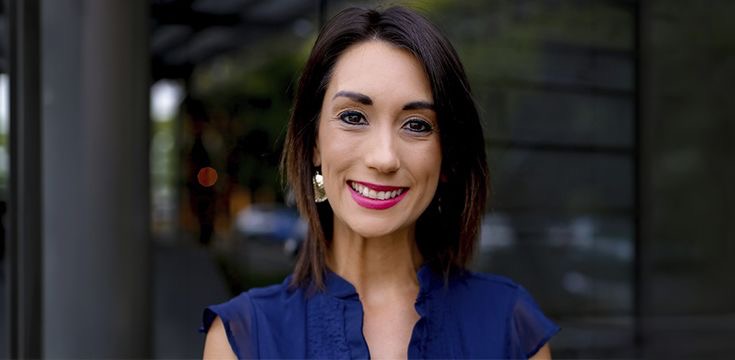
Samantha Reyneke is a Director and Attorney with a strong passion for complex, large-scale industries and the legal frameworks that support them. Her path into the mining sector came unexpectedly through construction and infrastructure law, where much of the work intersects with mining projects, energy, and major development initiatives. What drew her to these fields was the complexity involved in the way people, engineering, law, industry dynamics, and economics all come together in one environment. In this #CareerFocus interview, Samantha shares insights into her career journey, the lessons she has learned along the way, and her advice for women aspiring to build successful careers in the legal and mining sectors.
1. Congratulations on being featured on the cover of SA Mining. What does this recognition mean to you personally and professionally?
Thank you so much. It’s incredibly humbling to be featured alongside women in my field and in my firm who I am honoured to work with and learn from daily, but personally the best part for me was seeing my two little girls light up when I brought the magazine home and they saw me on the front cover because if they can see their mama there, they know there’s a space and a place for them in these (and other) industries too.
2. Can you tell us about your journey into the mining industry and what first sparked your interest in this field?
My path into mining came unexpectedly through construction and infrastructure law, where so much of the work intersects with mining projects, energy, and large-scale development. What drew me into these fields was the sheer complexity thereof, the people, the engineering, the law, the dynamics, and the economics beautifully colliding in one place.
3. Mining has traditionally been a male-dominated sector. What challenges have you faced along the way, and how did you overcome them?
At the beginning of emerging in a male-dominated sector, you feel the need to prove your seat at the table twice over, but I’ve learned that competence, consistency, and a gentle yet strong voice eventually speak louder than unintended assumptions.
4. What key moments or turning points in your career helped shape the leader you are today?
One of the biggest turning points in my career was making the leap from competition law into construction and infrastructure law, a move that ultimately fortuitously placed me at the intersection of mining, energy, and large-scale development.
Another defining moment for me was my allegiance with the Association of Arbitrators and stepping into the roles of adjudicator, arbitrator, and lecturer in construction law, because deciding disputes and teaching the next generation of leaders forces you to view the industry from every angle and sharpens both your judgment and leadership.
Over time, I’ve also come to realise that leadership is less about titles and more about responsibility. To raise the bar, create opportunities for others, and leave the table a little bigger and a lot kinder than you found it.
5. Who have been some of the mentors or role models who influenced your career, and how did their guidance impact your growth?
I’ve been incredibly fortunate to be guided by remarkable mentors who shaped my path in profound ways from my former director Tania Siciliano, who believed in me before I believed in myself and gently nudged me from competition law into construction law, to Cameron Staude, my fellow director and head of department at NSDV Law, who challenges me daily to rise to a higher bar while being my biggest cheerleader.
Along the way, I’ve also been inspired by barrier-breaking leaders like my fellow director, Lili Nupen, who emulates the epitome of female leaders driving change, and I have been supported by Advocate Tjaart van der Walt SC, whose generous guidance and advocacy within the construction and arbitration community have opened doors for me and continually encourage my growth.
6. What leadership qualities do you believe are essential for women who want to succeed in the mining industry today?
Courage, credibility and curiosity. The courage to speak up, the credibility that comes from mastery of your craft, and the curiosity to keep learning in an industry that never stands still. I also believe that bringing a personal touch and human element to the table goes a long way too.
7. The industry is evolving rapidly. What opportunities do you see for women entering mining now compared to when you first started?
There is a far more intentional focus on inclusion now, but more importantly, the industry is expanding into areas like renewable energy, infrastructure, and sustainability, where diverse thinking is not just welcomed, it is necessary.
8. How do you approach building confidence and resilience in environments where women are still underrepresented?
Confidence grows from preparation and purpose. When you know your material and remember why you’re there, the noise around you becomes far less intimidating. Dress up, show up, perform.
9. What advice would you give to young women or students who may be considering a career in mining or engineering?
Don’t talk yourself out of spaces you haven’t even stepped into yet. Some of the most exciting, impactful work in Africa sits in industries like mining, construction, infrastructure, and energy. It’s not necessarily the qualified who are called, but the called who are qualified.
10. How important is mentorship and support networks for women in mining, and how do you contribute to uplifting others in the industry?
Mentorship is everything because, as I have learnt from the incredible mentors who have willingly taken me under their wing, no one builds a career alone. Through teaching, training, and my work through NSDV Law and with the Association of Arbitrators, I try to open doors and demystify pathways for the next generation of leaders.
11. What changes would you still like to see in the mining sector to make it more inclusive and supportive for women?
I’d like to see inclusion move beyond policy into everyday culture, where women are not just present in the room but actively shaping and making decisions.
12. Looking ahead, what legacy do you hope to leave, both in the industry and for the next generation of women leaders in mining?
Professionally, I hope to contribute to a more thoughtful and fair industry, one that doesn’t discriminate, and one that is less adversarial and acrimonious and more collaborative and harmonious. Personally, I hope my daughters grow up believing that no industry, no table, and no leadership role is off limits to them and that they can do whatever they set their little minds to and their big hearts on.