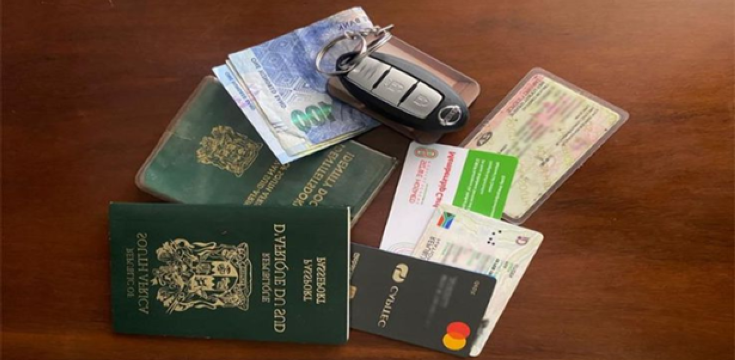
With the holidays looming, hundreds of thousands of Africans and expats are planning to travel to visit loved ones or experience new destinations. The upsurge in international travel is significant enough for airlines to increase the frequency of their flights both within Africa and to destinations that connect the continent to the world.
But with that comes an avoidable element of risk to travellers: If their travel documents are damaged or fall foul of relevant regulations, they may be denied a border crossing or embarking on an international flight. Annually, thousands of travellers are denied boarding for this reason. For each one, that entails anxiety and disappointment and perhaps a jeopardized holiday or business trip.
Airlines and travellers
Airlines, for example, are often in a difficult position where they can be fined for allowing travellers to board without valid identity documents. For travellers, there are some basic pitfalls to avoid: make sure that the passport isn’t damaged, pages aren’t coming loose from the binding, and the page with personal data is readable. Even frayed or torn corners of the document may lead to being denied boarding. So if your passport is visibly damaged, best to check that you still can use it for travel.
Border authorities
Beyond physical damage, border authorities and airlines worldwide face an even broader challenge during peak travel periods: verifying identity documents quickly and reliably amid rising passenger volumes. Identity document falsification remains a persistent global threat, increasing the pressure on inspection officers to distinguish genuine documents from increasingly sophisticated forgeries while keeping borders moving efficiently and securely.
Against this backdrop, Frederic Jacquot, Director & Head of Product ID Documents at TOPPAN Security, a global leader in secure identity and payment solutions, says the company’s new laser personalisation technology, CHROMA, now available for governments worldwide, represents a major advance in identity documents and can help smooth the travel experience.
It is the world’s first laser technology to deliver durable, full-colour, photo-realistic personalisation for polycarbonate identity documents. Launched in November 2025 at the ICAO TRIP Symposium in Montréal, Canada, CHROMA marks one of the most significant advances in the identity documents industry in three decades, combining enhanced protection against forgery with unprecedented portrait quality.
CHROMA brings identity to life with unmatched realism and precision, fusing photosensitive cyan, magenta, and yellow dyes with a single, precise laser beam, achieving true polychromatic engraving directly within the polycarbonate structure.
The result is a tamper-proof colour image that captures the tones, textures, and subtleties that make every face unique and surpasses today’s security benchmarks. The portrait embedded in the polycarbonate substrate achieves three important objectives: arguably the most lifelike identity picture available on such a document, increased durability, and advanced resistance to counterfeiting.”
Ensuring a full-colour portrait goes beyond aesthetics
It’s fundamental to human recognition and identity verification. We distinguish faces through skin tones, eye colour, and subtle features that define individual identity. At border control, officials see travellers in colour, while the person’s image, stored on the chip of their travel document, also appears in full colour on the official’s screen. For optimal verification, the personalised portrait on the document must reflect the same realism as both the person standing before the official and the chip image.
CHROMA ensures alignment across all three verification points, producing a personalised image that mirrors both the chip data and the individual standing before the officials. This enhances recognition confidence and streamlines verification processes, adds Mr Jacquot. “Identity documents must do more than fraud prevention; they should preserve the truth of who we are. CHROMA provides the veracity, authenticity, and assurance that governments and citizens require,” he concludes.