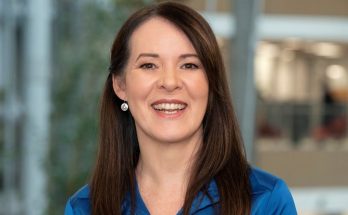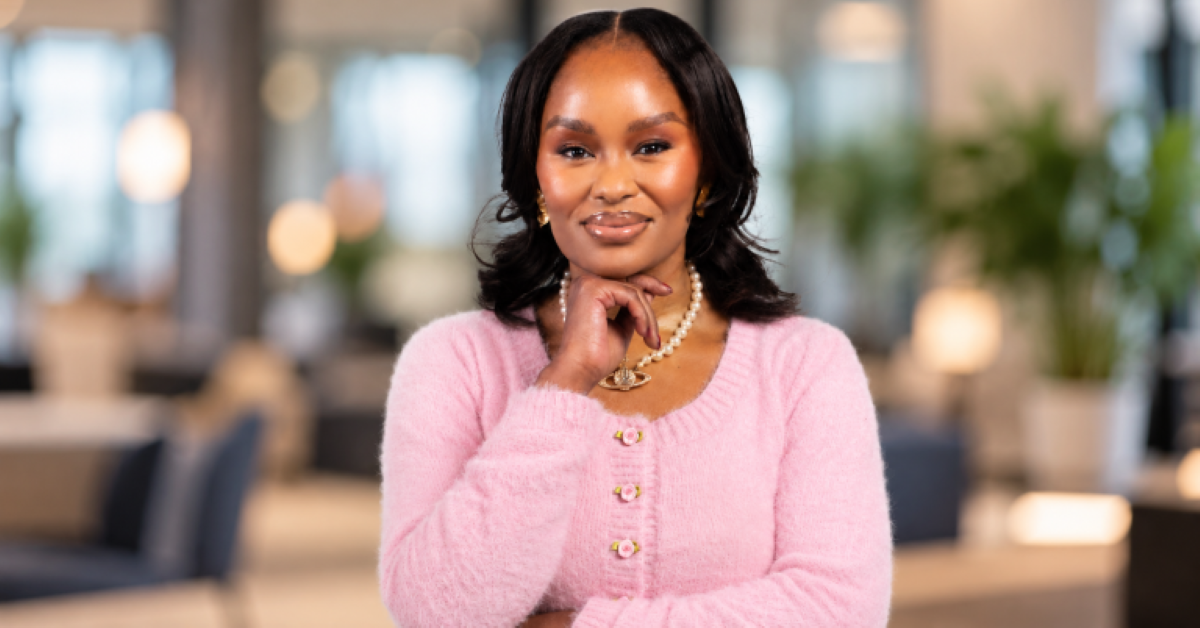
Life can change in an instant, challenging everything we know about ourselves and forcing us to find the courage to begin again. For attorney and senior corporate affairs executive Tebele Makhetha, navigating breast cancer, motherhood, marriage, divorce, and career uncertainty has been a journey of resilience, faith, and rediscovery.
In her new memoir, I Choose Life, Tebele reflects on the experiences that shaped her and the power of choosing to live fully, even when life takes an unexpected turn. In this Q&A, she shares her personal journey, the lessons she has learnt along the way, and why embracing change can open the door to new beginnings.
1. You were someone who always had a plan. What has life taught you about letting go of control when things don’t go according to plan?
I have always been a planner. I had a fairly clear picture of what my life was supposed to look like, and I worked hard to make that picture a reality. I believed that if I made the right decisions, worked hard enough, and planned carefully enough, life would largely unfold as I intended.
Then life happened. Cancer, the breakdown of my marriage, divorce, and the uncertainty surrounding my career challenged everything I thought I knew about control. I have since learned that planning is important, but so is surrender. We can make the most meticulous plans, but we cannot control every outcome. Sometimes life requires us to release our grip on what we thought should happen and become open to what might still be possible.
For someone who has always found comfort in certainty, that has been one of my greatest lessons. I am learning that surrender is not the same as defeat. It is accepting that I cannot control everything while recognising that I still have agency over how I respond. I may not get to choose every chapter of my story, but I can choose how I live through it.
2. How have motherhood, marriage, divorce, cancer and your career shaped the woman you are today?
Each of these experiences has introduced me to a different version of myself. My career taught me ambition, discipline, resilience, and the importance of finding my voice. Marriage taught me about partnership, compromise, and the complexity of loving another person. Divorce forced me to confront some uncomfortable questions about identity, particularly who I was when I was no longer someone’s wife.
Cancer confronted me with my mortality and challenged my understanding of strength. It stripped away many of the things I had previously used to define myself and forced me to reconsider what truly mattered.
Motherhood has perhaps been my greatest teacher. My daughter, Naledi, has given me a reason to keep finding joy, even during some of my most difficult seasons. Through her, I have learned that love can coexist with fear, that presence is more valuable than perfection, and that the smallest moments can become our most treasured memories.
Collectively, these experiences have taught me that I am not any one of my titles or circumstances.I am more than a wife, a mother, an executive, a divorcee, or a cancer patient. I am a woman who is continually becoming. And perhaps the greatest gift of this journey has been discovering that I can lose parts of the life I once knew without losing myself.
3. What does “I Choose Life” mean to you, and how can other women embrace that mindset?
For me, I Choose Life is both a declaration and a daily decision. It is not simply about surviving cancer. It is about choosing to participate fully in life, even when life is difficult, uncertain, or profoundly different from what we imagined. When people hear the title, they may assume it is about choosing to live rather than die. But the message is much broader than that.
It is about choosing joy without denying pain. Choosing hope without pretending that fear does not exist. Choosing forgiveness, even when you have been deeply hurt. Choosing to begin again when everything familiar has fallen apart.
Most importantly, it is about recognising that circumstances do not have to have the final word on how we experience our lives. I think women can embrace this mindset by permitting themselves to live beyond the expectations placed upon them, whether by society, family, or themselves.
We are often so consumed with being everything to everyone that we forget we are also entitled to lives that are meaningful and fulfilling. Choosing life sometimes means making a bold decision. Other times, it simply means getting out of bed, finding something to be grateful for, or allowing yourself to laugh in the middle of a difficult season. It is not a once-off decision. It is a choice we make, sometimes repeatedly, every single day.
4. How has your experience with cancer changed the way you view life, your body and the present moment?
Cancer has fundamentally changed my relationship with time. Before my diagnosis, I lived much of my life in anticipation of the next milestone. The next qualification, the next promotion, the next holiday, the next achievement. There was always something to work towards. Cancer taught me that while tomorrow is worth planning for, today deserves to be lived.
I have also had to develop a different relationship with my body. There have been moments of frustration, disappointment, and even anger at the limitations imposed by illness and treatment. But I have gradually learned to extend grace to a body that has endured so much. I no longer measure its worth solely by what it can do or how it looks. I am learning to appreciate it for carrying me through experiences I once thought impossible to endure.
Perhaps the biggest change has been my appreciation for ordinary moments. A conversation with my daughter. A meal with family. Laughter with friends. A beautiful sunset. These are no longer the small things that happen between life’s big moments. They are life itself. Cancer has taught me that being alive and truly living are not necessarily the same thing. I want to be intentional about the latter.
5. What did the end of your marriage teach you about loss, identity, and starting again?
Divorce is a peculiar kind of grief because you are mourning not only the relationship that has ended, but also the future you believed you were building together. For me, one of the most difficult aspects was the loss of an identity I had invested in. I had to confront the question: Who am I if I am no longer a wife? It sounds simple, but when you have built a life around certain roles and expectations, losing one of them can leave you feeling unanchored.
What I eventually came to understand is that the end of a marriage is not the end of a woman. I had to separate the failure of a relationship from the idea that I had somehow failed as a person. I also learned that starting again does not mean erasing the past or pretending it never mattered. There were beautiful moments, difficult lessons, and experiences that shaped me. All of them form part of my story.
But they do not have to determine the rest of it. Divorce taught me that sometimes choosing yourself is not an act of selfishness. It is an act of self-preservation. And that there can still be a beautiful life on the other side of something you never imagined ending.
6. What would you say to women who feel they are falling behind the life they had planned?
I would ask them one question: Behind whom? We have become so accustomed to measuring our lives against timelines that we rarely stop to question who established those timelines in the first place. By a certain age, we believe we should be married, have children, own property, reach a particular level in our careers, or have achieved some other measure of success.
And when life does not unfold accordingly, we begin to feel as though we have failed. But life is not a race, and there is no universal timetable for becoming who you are meant to be. At different points in my life, I have had to start again in ways I never anticipated. I have had to reconsider my priorities, redefine success, and release dreams that no longer fit the life I was living.
None of that means my life has been wasted. Sometimes what looks like a setback is an invitation to discover a different path. I would encourage women to stop measuring their progress solely against the lives they imagined and begin recognising the value of the lives they are actually living. You are not behind. You are on a journey that is uniquely yours. And there is still room for new dreams.
7. How has motherhood influenced the way you approach fear, uncertainty and creating meaningful memories?
Motherhood has made my experience with cancer both more frightening and more meaningful. There is a particular vulnerability that comes with being a mother and confronting your own mortality. Your fears are no longer only about yourself. They extend to the little person whose world is so intimately connected to yours.
I have had moments when the uncertainty of my health has felt overwhelming, particularly when I think about my daughter and the future I had imagined sharing with her. But motherhood has also given me an extraordinary reason to be intentional about the present.
I want Naledi to remember a mother who loved her deeply, who laughed with her, travelled with her, celebrated her, and made ordinary days feel special. Some of my most precious memories are not elaborate occasions. They are the conversations we have, the things she says that make me laugh, and the simple joy of experiencing the world through her eyes.
Taking her to Mauritius and watching her experience her first international holiday was particularly special. I had visited before, but seeing it through her eyes made it feel entirely new. I have learned that meaningful memories are not necessarily created through grand gestures. They are created through presence. I cannot promise my daughter a life without uncertainty, but I can give her love, honesty, reassurance, and as many beautiful moments as I possibly can. And that is what I continue to choose.
8. How has your faith helped you navigate the most difficult chapters of your life?
My faith has been the anchor that has held me through seasons when almost everything else felt uncertain. But I want to be clear that having faith does not mean I have never been afraid, angry, disappointed, or confused. I have experienced all of those emotions. There have been moments when I have questioned why certain things were happening to me, particularly when one difficult experience seemed to follow another.
What faith has given me is not an exemption from suffering, but a source of strength within it.
I have learned that I can bring my fear, frustration, and disappointment to God without feeling that I am somehow failing as a Christian. One of the most important lessons of my journey has been understanding that faith and fear can coexist. Courage is not the absence of fear. Sometimes courage is choosing to move forward while you are still afraid.
Scripture has been an enormous source of comfort to me, particularly Isaiah 40:31, which reminds us that those who wait upon the Lord shall renew their strength. There have been days when I have had very little strength of my own. On those days, my faith has reminded me that I do not have to carry everything alone. I am still learning what it means to trust God when the outcome is uncertain. And perhaps that is where faith becomes most meaningful.
9. How do we grieve the life we imagined while finding the courage to create a new one?
I think the first step is permitting ourselves to grieve. We are often encouraged to be strong, move on, look for the silver lining, and focus on what comes next. While those sentiments may be well-intentioned, they can sometimes deny us the space to acknowledge what we have lost.
And not every loss involves death. We can grieve a marriage, a career, our health, a friendship, an identity, or a future we had imagined. Those losses deserve to be acknowledged. I have learned that acceptance does not require us to be happy about what has happened. It simply means recognising reality for what it is rather than remaining trapped in what we wish it had been.
There is also something liberating about understanding that two things can be true simultaneously. You can be heartbroken about what you have lost and hopeful about what is still possible. You can miss the life you imagined while finding meaning in the one you now have. For me, courage has rarely looked like one dramatic moment of reinvention. More often, it has been a series of small decisions to keep participating in life.
To make plans again. To pursue a new dream. To allow myself to experience happiness without feeling guilty about the sadness that preceded it. We do not honour what we have lost by refusing to live beyond it. Sometimes the most courageous thing we can do is allow ourselves to imagine a future again.
10. How did uncertainty around your career challenge your sense of identity and success?
For much of my adult life, my career was an important part of how I defined myself. I have always been ambitious and academically driven. I invested heavily in my education and professional development, and I took great pride in building a career across law, business and corporate leadership.
Professional achievement gave me a sense of purpose, independence and accomplishment.
So when my health required me to step away from the professional life I had worked so hard to build, I found myself confronting another identity crisis. Who was I without the title, the responsibilities, the meetings, the deadlines, and the constant sense of productivity? It was uncomfortable to discover how closely I had associated my value with what I achieved.
I had to learn that rest is not laziness, that productivity is not the only measure of purpose, and that my worth does not diminish when I am no longer occupying a particular professional position. Writing I Choose Life has been an important part of that rediscovery. It has allowed me to use my experiences, voice, and skills differently. As I explore authorship and speaking, I am discovering that purpose can evolve. Success, to me, is no longer exclusively about titles, remuneration or professional recognition.
It is increasingly about alignment. Am I living in a way that reflects my values? Am I doing work that matters to me? Am I making a meaningful contribution while still making room for the people and experiences I love? Those questions have become far more important than the title on my business card.
11. What role have other women played in supporting you through your journey?
Other women have been an extraordinary source of strength throughout my journey. I have been fortunate to be surrounded by women who have shown up for me in ways that have been both practical and deeply meaningful. My sisters, friends, and the women in my wider support system have reminded me repeatedly that strength does not always mean standing alone. Sometimes strength is allowing someone else to carry you when you no longer have the capacity to carry yourself.
There have been women who have prayed with me, checked in on me, encouraged me, celebrated my victories, and sat with me through some very difficult moments. What has been particularly moving is the collective faith of the women around me. There have been times when my own hope has felt fragile, but theirs has remained steadfast.
I often think about the biblical account of the paralysed man whose friends lowered him through a roof to reach Jesus. His healing was made possible, in part, because of the extraordinary faith and determination of the people who carried him.
That story has taken on profound meaning in my own life. I have been carried by the love, prayers, and faith of others. Women have also played an important role in bringing I Choose Life into the world, encouraging me to write, holding me accountable, and reminding me that my story might help someone else. This journey has reinforced my belief that we are not meant to navigate life’s most difficult chapters in isolation. There is immense power in women who genuinely show up for one another.
12. What is the one message you hope women take away from I Choose Life?
That your life can still be beautiful, meaningful, and purposeful, even when it looks nothing like the life you planned.I wrote I Choose Life from a place of lived experience, not because I have all the answers or because I have mastered the art of navigating adversity. I am still learning. I still have difficult days. I still experience fear, disappointment, and uncertainty.
But I have also experienced extraordinary love, laughter, grace, hope, and moments of unexpected beauty in the midst of it all. I want women to understand that they do not have to wait until everything is perfect before giving themselves permission to live. You can choose joy while carrying grief. You can find purpose in an unexpected season. You can begin again after loss. You can be vulnerable and courageous at the same time.
Above all, I hope women walk away knowing that they are more than what has happened to them. Our circumstances may shape our stories, but they do not have to define the entirety of who we are. You may not have chosen what happened to you, but there is still power in choosing how you live from here.
And that, for me, is what it means to choose life.