Every year, Heritage Day presents me with the same small identity crisis: what exactly am I supposed to wear? I am what my granny used to call a “mixed masala” Irish, Scottish, English, Welsh and South African, shaken together over several generations. I claim the Welsh most enthusiastically, mainly because I wish I had inherited the voice. My heritage, at least the kind that can be represented through clothing, is difficult to pin down. It is also difficult for an umlungu to compete with the glorious fabrics, beadwork, colour and cultural confidence on display across South Africa on Heritage Day.
While other people arrive looking magnificent and unmistakably connected to somewhere, I tend to look as though I am on my way to a sensible lunch. Many South Africans solve this problem by wearing a Springbok jersey, an ingenious piece of national shorthand: green, gold and instantly recognisable. I have never been an avid rugby supporter, though. At least, I wasn’t until my 11-year-old son began playing for his school team this year. (That, however, is another story.)
A personal reflection on family, memory and the unexpected ways we carry our heritage with us
This year, instead of trying to dress as a culture I couldn’t convincingly locate, or disguising myself as a lifelong rugby fan, I thought about heritage differently. I thought about the people who made me, not only my ancestors in the formal family-tree sense, but the people whose love, eccentricities, expectations and ways of being have become part of me. The people who taught me what strength looked like, what generosity felt like and, occasionally, what I absolutely did not want to become. I decided to wear them.
On my wrist, a bracelet embroidered with my name, given to me by my son when he was little. No insurance company would be impressed by it. But it marks a version of him and of me that no longer exists in quite the same way. He was once small enough to choose a present because it had his mother’s name on it. I was once the mother of a small boy. Now, at 11, he is stretching towards adolescence, developing opinions on everything. I am learning that parenting is a long series of introductions and farewells: you meet the baby, the toddler, the schoolboy and the almost-teenager, loving each one while gradually releasing the child who came before.
On my finger, a ring given to me by my great-aunt, a British publican whose cooking could have put the Two Fat Ladies to shame. She belonged to a generation of women who might never have described themselves as powerful, yet somehow ran homes, businesses, kitchens and entire communities through a combination of competence, humour and food.
Around my neck is a necklace my mom gave me years ago. It reminds me that inheritance isn’t only what arrives after someone dies. We inherit from the living too: their habits, anxieties, resilience, expressions, recipes and ways of loving. Some of these we carry gratefully. Some we don’t even recognise as inherited until we hear ourselves saying something in exactly our mother’s voice.
And lastly, my dad’s wristwatch, an old Seiko from the 1980s. Looking at these pieces of jewellery, I realised I had made my own Heritage Day outfit after all. Not traditional dress, but a personal family constellation: a son, a mother, a formidable great-aunt, a father, each occupying a different place in my story.
Constellations don’t hold still
Family constellations are rarely as orderly as the diagrams suggest. People marry and divorce. Children are born or adopted. Families blend, fracture and rearrange themselves. Someone who once stood at the centre moves to the edge. A person we barely knew becomes essential. Friends become family. Relationships end, but their influence doesn’t conveniently disappear with them. This is, in many ways, the real story of South African families this Heritage Day: the blended households, the adoptive parents, the cross-cultural marriages, the co-parents who used to be spouses.
American psychiatrist Murray Bowen spent decades studying families as what he called “emotional units” systems in which every member is so interlinked that a shift in one person’s functioning inevitably changes the functioning of everyone else. Bowen’s family systems theory, still taught in therapy training today, argues that we never really change alone. Move one person’s position, even slightly, and the whole system has to renegotiate itself around the gap.
This is one of the more uncomfortable truths about personal change: when we change, our relationships change too. Sometimes this is because other people cannot accompany us into the next version of our lives. Sometimes it’s because we can no longer occupy the role they assigned us. And sometimes it’s because growing means stepping out of an old pattern, even one that once made us feel safe.
We talk about change as though it’s an individual act: I made a decision, I changed direction, I began again. But no one changes alone. Every choice sends a small tremor through the constellation. Some people move closer. Some pull away. Some insist we return to where we were, because our change is inconvenient for them. And then there are the people whose influence travels with us, even when they can’t.
Perhaps this is what heritage really is. Not a fixed identity or a tidy line of descent, or even a costume we put on once a year. Heritage is the collection of stories, values, wounds, gifts, and peculiarities handed to us by the people who came before and by the people who have joined us along the way, however that joining happened.
What we choose to carry
Personal change asks us to examine that inheritance. What will I keep? What will I reinterpret? What ends with me? What deserves to be carried forward? We are not passive recipients of our heritage. We are its editors. We can honour where we come from without being trapped by it. We can treasure the people who shaped us while acknowledging that some of what they gave us no longer fits. We can add new people, new rituals and new stories to the family constellation. We can even change our minds about rugby.
So, on Heritage Day, I am going to wear a bracelet, a ring, a watch and a necklace. To anyone else, they will probably look like ordinary pieces of jewellery. To me, they are a map of where I come from, whom I have loved, and the many versions of myself I have been along the way.
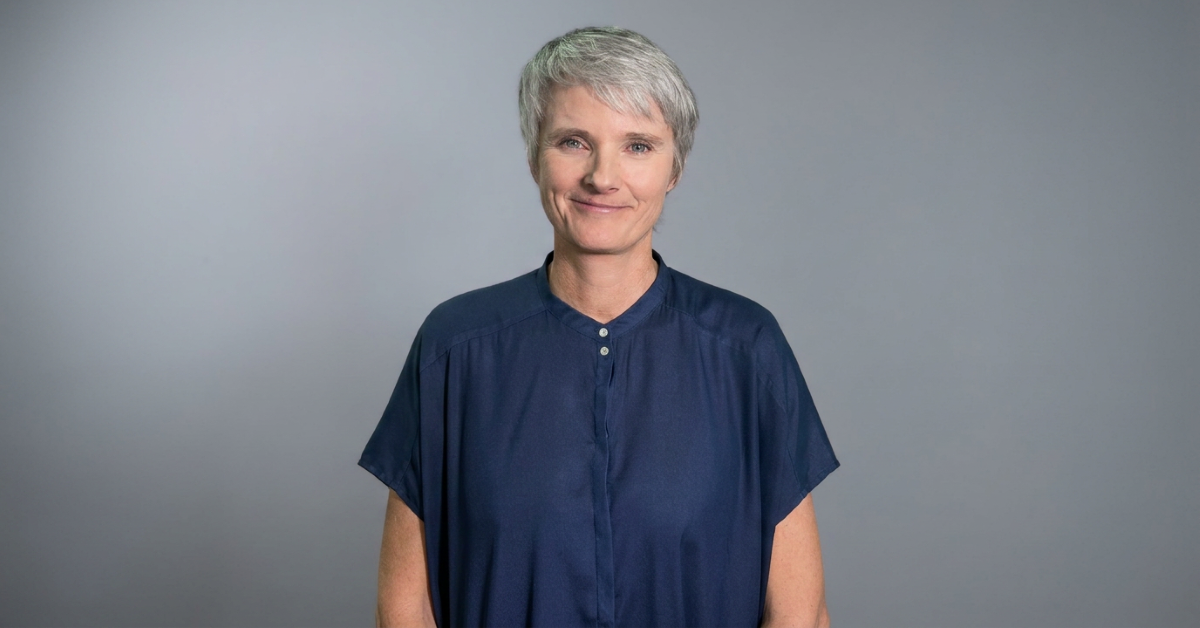
Article by: Gill Cross