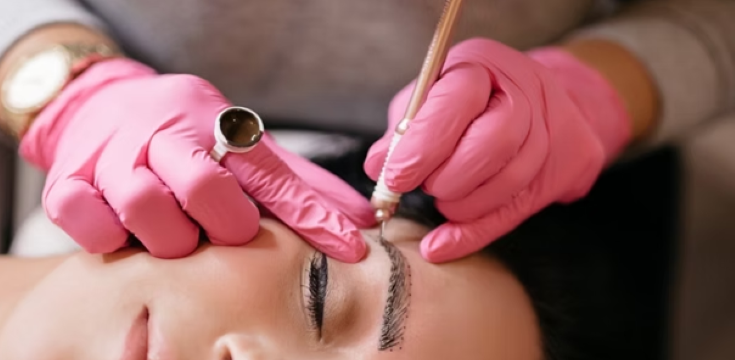
With new and upcoming products in the beauty industry, many women want to know if it is ok to start or continue treatments like microblading when they become pregnant. Procedures like these often require more than one visit, broken up between weeks or even months. For pregnant women, the “nine-month stretch” raises questions about their use in pregnancy. Without the research available, we simply do not know how they may, or may not, affect your pregnancy or your breastfed infant.
Ink
The pigments used in microblading are made up of different types of chemical compounds, like oxides, which can be pre-mixed and purchased by the cosmetic tattoo artist. They may also be mixed by the professionals themselves. A few unknowns are how much pigment, if any, is going into the skin, is entering the mom’s blood, crossing the placenta, and reaching the baby, which also means we do not know if the ingredients in the pigment could pose any risk.
The same goes for breastfeeding moms without good data, we do not know how much pigment, if any, is getting into the milk reaching the breastfed baby.
Possibility of infection
Another thing to consider about microblading in pregnancy and breastfeeding is the risk for infection. As previously mentioned, during the microblading process, a cosmetic tattoo artist deposits pigment into the outer layer of the skin by penetrating the skin with tiny needles.
There is a possibility that the needles used may not be completely sterilized, which can lead to a higher risk of health issues such as staph infection, abscess, skin inflammation, or other infections like Hepatitis B and HIV.
Medications like antibiotics may be needed to treat these conditions, sometimes requiring weeks or months of treatment. If left untreated, they can lead to health issues for mom and baby. Visiting a reputable business with good hygiene practices in place is a good idea should you choose to have microblading done during pregnancy or while breastfeeding.
Pain
Some women report that the microblading treatment can be painful. If that’s the case, the cosmetic tattoo artist may recommend the use of additional medications to control the pain (e.g., a topical lidocaine cream or Tylenol). During pregnancy and breastfeeding, Tylenol (acetaminophen) is considered by most healthcare professionals to be the preferred pain reliever.
With topical exposures, like lidocaine cream, a significant amount is generally not expected to enter the mother’s blood and result in an exposure to the pregnancy. Consider these additional exposures during pregnancy or while breastfeeding when deciding whether or not to book an appointment.
With all these unknowns in mind, it can be difficult to evaluate what possible risks a developing baby or breastfed infant might face. Ultimately, it comes down to weighing the risks vs. the benefits and going to a licensed cosmetic tattoo artist.
Moving forward, rather than waiting until you are no longer pregnant or breastfeeding to go for microblading treatment. Your eyebrows might not look as great for the next year, but you won’t have to constantly worry about the ink reaching the baby or the possibility of infection from having this done.
If you have questions about microblading while pregnant or breastfeeding, don’t hesitate to contact a MotherToBaby specialist via phone, text, chat, or email.