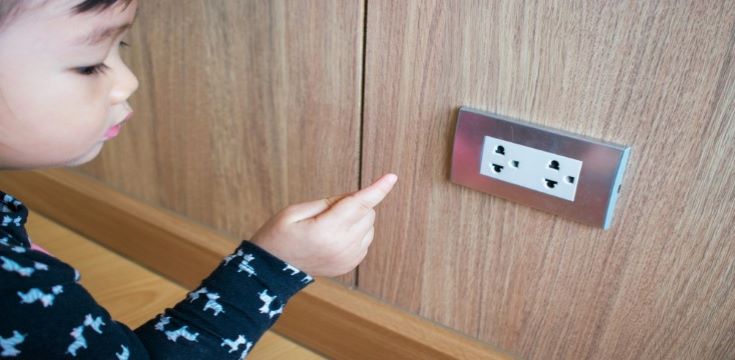
From the 29th of May to the 4th of June is National Child Protection Week. Part of any parents’ responsibility towards protecting their children starts in the home. Eighty percent of injuries in young children occur in or around the home. It can be a shock to some new parents when they realise how unsafe their homes actually are – with potential hazards lurking in every room.
Children are naturally curious and are tempted to explore in ways that can put them at risk. Whether it is opening cupboards in the kitchen and bathroom where potentially harmful substances are kept. Putting small fingers where they don’t belong, or attempting to climb up or over large and possibly unstable furniture items – to name just a few antics of the average child. However, there are many things you can do to make your home as safe as possible for your young ones.
Helpful, and potentially life-saving guidelines on how to ensure your baby’s environment are childproof:
Childproofing checklist
- Put rubber or foam protectors around corners and sharp edges such as tables, kitchen countertops, televisions, etc.
- If your home has stairs, make sure to install a sturdy child safety gate. Preferably at the top and bottom of the stairs.
- Ensure that movable furniture, such as a television or bookshelf, is firmly fixed to the wall with brackets.
- Garbage bins should be kept in a place where your baby or toddler is not able to reach them e.g., in a cupboard with locks.
- All doors should always be closed or locked, so that your baby cannot push them open while crawling.
- The dishwasher, fridge, and all cupboards should have child-proof locks, with cleaning detergents and any harmful products safely locked inside.
- The kitchen can be a dangerous place for small children. If you have a pot on the stove ensure that you always use the back burners. Turn the handle of the pot away from the edge of the countertop.
- Ensure the kettle and its cord are kept out of reach. Make sure that any sharp knives are kept in a drawer that is not within reach or is locked.
- Make sure the toilet seat remains closed. Not only is it unhygienic for children to play in the toilet bowl but babies have been known to drown by falling headfirst into the toilet.
- Put covers on plugs that are located closer to the floor or on the eye level of your baby when they are crawling. These covers prevent small children from putting their fingers into electric plug points.
- Loose cords for big electronics such as a television, sound system, etc., should be fastened together with a plastic zip-tie.
- Load shedding can cause potential hazards for children if you are using candles or paraffin lanterns for light. Always keep these out of reach, and on stable surfaces. Put candles inside a glass jar or suitable glass cover to protect the flame from small fingers.
- Winter is also a potentially more dangerous time for young children as people have fires burning and heaters switched on. Make sure you have a secure grate around or in front of your fireplace so that children cannot reach the flames.
- Keep gas heaters and electrical heaters out of reach if possible. Ensure that you never leave a child unattended with these heating appliances.
- Moving outdoors, make sure that your swimming pool has a sturdy fence around it and ideally, a pool cover as well.
- If you have pool chemicals as well as fertilisers and pesticides stored in a shed or accessible place near the house ensure they are locked in a cupboard or box where children cannot reach them.
- Likewise with sharp garden implements and tools that can injure young children – keep them locked away and out of reach.
There are many more practical steps parents can take to ensure the safety of their young children but by putting the above measure in place you will have ensured your home is a far safer space for the youngest and most curious family members.
Brights Hardware have on-site experts in all of their stores. To provide advice and guidance on any of these home proofing products available at www.brights.co.za.