Gone are the days when you might wander into your local pharmacy, take a ‘bullet’ to both earlobes and leave with freshly pierced, albeit uneven holes in each ear. Ear curation has been around for a little while now and involves a lot more than just a ‘bullet’ to the lobe. In fact, whilst piercing with a gun used to be commonplace, it is being used less and less.
The reason for the decline in this method is the hygiene of the device itself, leading to a higher rate of piercing infection. These days, reputable piercers use a single-use, sterile needle to pierce the ear. Leaving a clean, perfectly placed hole in which to place the earring of choice.
“The term curated ear is a relatively new concept for a time-old tradition of a broader field of body piercing, of expressing individuality, marking achievements, or even expressing a rebellious flair,” says Gavin Middleton, Piercing Expert from Black Betty Design.
“While golden earrings are no longer used to pay for sailor’s burials, they are fastly becoming a status symbol and have allowed people to express themselves with a variety of stylish and delicate ornate jewellery that allows unique combinations to allow individuals to feel complete.”
Middleton offers some critical advice for post-piercing care:
Don’t rotate jewellery in a new piercing
Despite what you were told as a child, do not rotate your new earring after it has been placed. By rotating, you’re likely to damage the delicate, healing skin and slow down the process. To keep the new piercing clean and hygienic you shouldn’t touch it at all unless you’re applying a saline solution.
Try not to sleep on your new piercing
Don’t sleep on your fresh piercings. Not only because the area is sensitive, but also to avoid any movement of the earring. Using a U-shaped travel pillow will help with positioning.
Only clean your piercing with saline solution
Piercings, especially cartilage placements, require special love and care for months after your initial piercing. After your piercing, the piercer will provide you with a saline solution to keep the area clean and hydrated. Alcohol or surgical spirits aren’t designed for cleaning.
Try and keep your hair away from your piercing
In addition to the obvious entanglement that might occur if your hair were to get caught in your new piercing, there are also chemicals in hair products that shouldn’t come into contact with your new piercing. If possible, wash your hair whilst kneeling over the bath or basin to avoid contact.
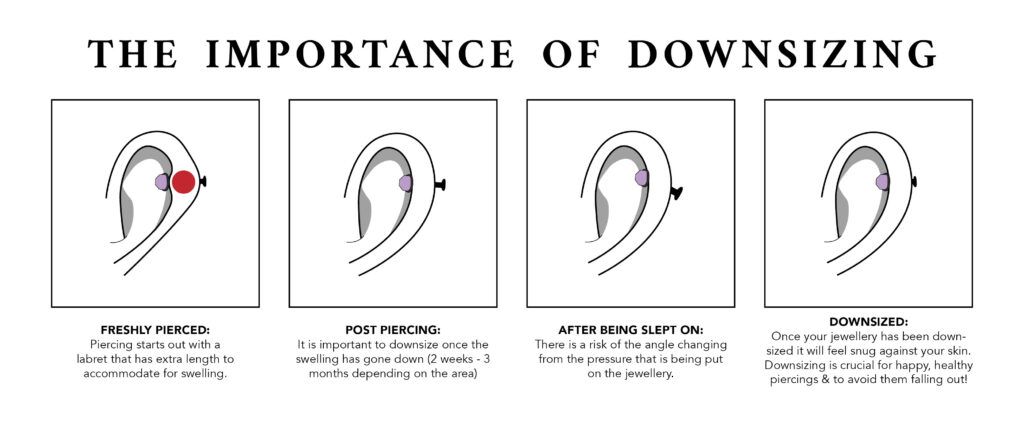
Downsize your jewellery
During the healing process, you will also be required to downsize your jewellery (the length of the labret/flat-back bar). This is done to ensure that your piercing does not migrate or heal at an unnatural angle. (see attached reference image).