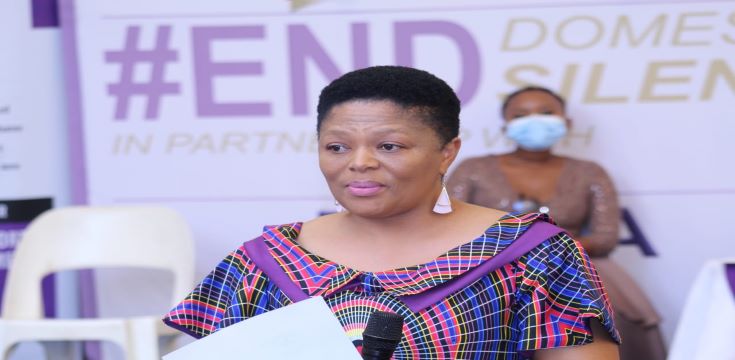
On 22 February 2022, People Opposing Women Abuse (POWA) had a Bottomless Tea Conversation at the Eagles On Fire Church in Tembisa, one of South Africa’s gender-based violence (GBV) hotspots. The event focused on the Impact of Narcissistic Personalities on GBV in the Church.
It was held as part of the #EndDomesticSilence initiative being run by Unilever tea brand, Joko in partnership with POWA. Launched in 2019, the initiative aims to end the silence around domestic violence and increase the speaking out, reporting of, awareness, and education around domestic violence.
At the event were POWA staff, community members, and various stakeholders including the Tembisa Child and Family Welfare Society, Child Welfare, Childline, faith-based organisations, and members of the GBV Brigades which inform households about the impact of GBV.
The panel of speakers at the Bottomless Tea Conversation included a GBV survivor, Noluvuyo Zantsi, a Clinical Psychologist, Koketjo Mantati, a POWA social worker, Pastor Nyathi, and Dikeledi, a representative of the South African Depression and Anxiety Group.
During the event, Kate Mocheki, Head of Projects at POWA, spoke about the importance of a woman suffering domestic violence talking about it to get a new understanding of her experiences and receive the support she needs to leave an abusive relationship. “People are dying because of silence and because they kept quiet for so long. By educating yourself about narcissism, you become aware that you are being abused by a narcissist and are empowered to address the situation.”
Noluvuyo informed everyone in attendance about the characteristics of Narcissistic Personality Disorder, which include, but aren’t limited to, regarding themselves as superior, demeaning you, lacking empathy, having an exaggerated sense of self-importance, being self-centred, controlling, status-conscious, disrespectful, manipulative and easily jealous. She added that they often make you feel it’s your fault they abused you, but being abused is never your fault. Narcissists can also gaslight you, which means making you second guess your feelings, perceptions, and memories.
Noluvuyo said it’s important to keep in touch with friends and family, so you get the support you need if you are ever with a narcissist.
It was also noted that some priests and elders in the church are narcissists, hiding nastiness and abuse behind a mask of goodness and morality.
A GBV survivor spoke of how her ex-husband, who is a pastor, was emotionally and financially abusive making her carry all the household costs including paying for food, petrol, and school fees.
Koketjo said she knew of some women who were in abusive relationships with priests for years, kept quiet about it, and would be in church every Sunday showing their support for them. “Some narcissistic men believe they are entitled to make all the household decisions because they are breadwinners,” she added. “They often want you to consult them on every move you make, stating that if you don’t, you don’t respect them. Don’t ignore the red flags of a narcissist. If you have been in a relationship with one, don’t blame yourself. Through counselling, you can undergo healing by reclaiming your identity and learning to set boundaries and love yourself.”
Penny Ndlovu, a member of the audience, described the church as being ignorant: “I was in an abusive relationship and would go to church with blue eyes, but no elder in the church ever asked me what was happening and if they could help.”
Patricia Naha, POWA’s Project Assistant, added: “Abused women who approach the church for assistance are often told they should pray about the issue without being given other support. We want the church to be a safe space where abuse isn’t swept under the carpet and where women suffering abuse can speak about their problems openly without being judged.”
Going forward, more open, honest conversations about various aspects of violence towards women will run as part of the #EndDomesticSilence initiative. It is through having these conversations over Joko tea that one is released from the burdens troubling their minds, that one can gain knowledge, courage and support to end their silence and abuse and where communities can change harmful attitudes and behaviour patterns that perpetuate domestic violence.
You can view the Bottomless Tea Conversation on the POWA Facebook page.
If you or someone you know is being abused, you can contact POWA on (011) 591 6800/(011) 642 4345/6, email counselling@powa.co.za or send a DM to POWA, for counselling.